
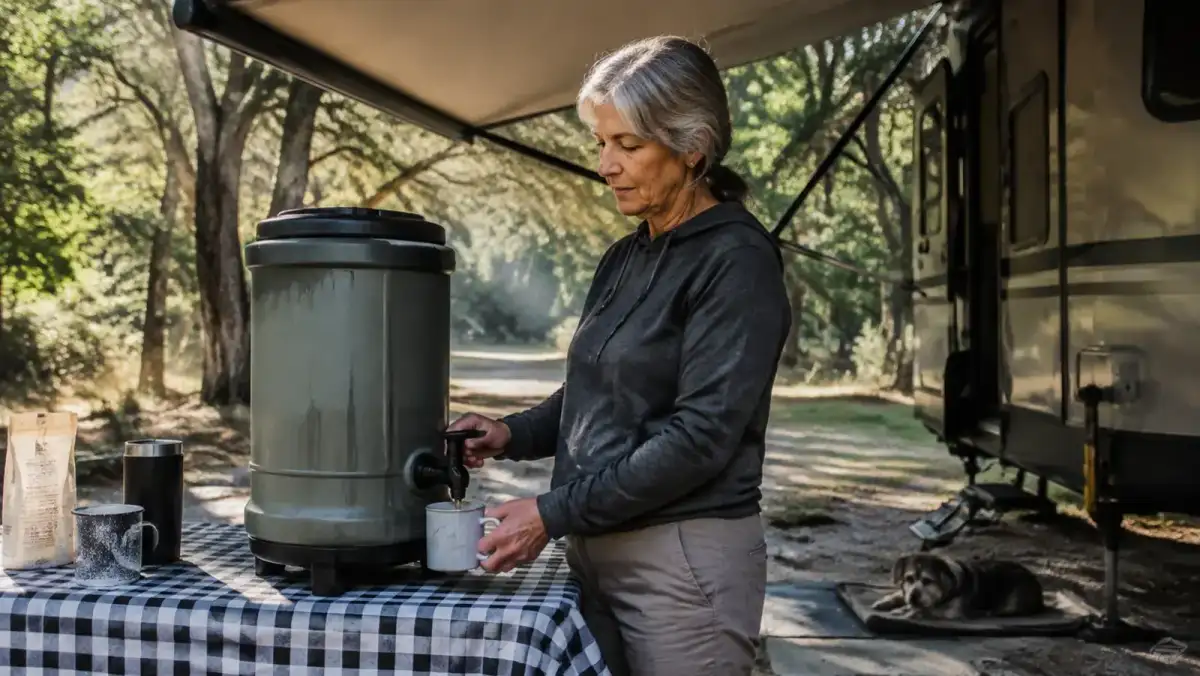
I used to think a cooler bag of ice cubes and a gallon jug was all I needed to keep drinking water cold at camp. Then I spent a July week at a Corps of Engineers campground on Kentucky Lake, temperatures pushing the mid-90s by two in the afternoon, and watched my ice turn to lukewarm water by lunch on day one. I was making a second trip to the camp store for a bag of ice before the coffee pot had even cooled down. That trip cost me time I didn't have and gas money I hadn't planned on, and it happened three more times that week before I figured out what I was doing wrong.
What finally fixed it wasn't a fancier cooler. It was the Igloo insulated beverage dispenser with a spout, the kind that looks like an oversized water cooler jug, paired with a handful of habits that have nothing to do with the equipment and everything to do with timing. Once I started pre-chilling the Igloo dispenser the night before and switched from cubes to block ice, I went from refilling twice a day to topping off once, sometimes not even that. The steps below are exactly what I do now at every site, whether it's a shaded state park loop or a full-sun gravel pad with nothing but a trailer awning between me and the afternoon heat. None of it costs extra money or takes more than a few minutes of planning the night before.
Stop losing your ice by noon. Start with the right jug.
This is the insulated beverage dispenser I fill every morning now. The spout means nobody's dunking a dirty cup in to scoop water, and it holds cold a full day if you follow the steps below.
Amazon Check Today's Price on Amazon →Step 1: Pre-chill the Igloo dispenser the night before, not the morning of
This is the step almost everybody skips, and it's the single biggest reason ice disappears fast. If you fill a room-temperature dispenser with ice and water first thing in the morning, a good chunk of that ice spends its first hour just cooling down the plastic and the air trapped inside the Igloo jug itself. That's ice you paid for and hauled in a cooler, gone before you've poured your first cup of anything.
The night before, I fill the empty dispenser about a third of the way with cold tap water, close the lid, and let it sit in the shade or inside the trailer overnight. In the morning I dump that water out, and the plastic itself is already cold to the touch instead of sitting at whatever the outside air temperature happens to be. It sounds like a small thing. In practice it's the difference between ice lasting until mid-afternoon versus lasting until lunch. I learned this the hard way after three straight mornings of filling a jug that had been sitting in a hot trailer pass-through all night, wondering why my ice never seemed to make it past ten in the morning.
Step 2: Use block ice, not cubes, whenever you can get it
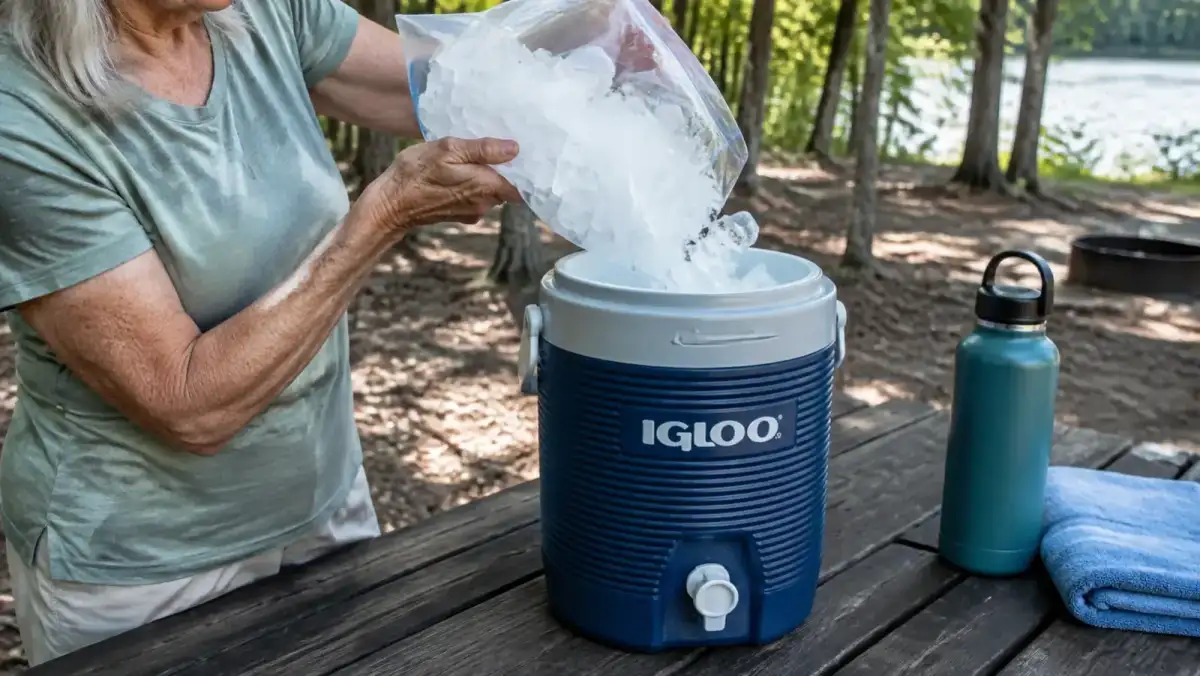
Cubes melt fast because there's so much surface area exposed to the water and air around every single piece. A block of ice, the kind you can freeze yourself in a loaf pan or an old margarine tub, has a fraction of the surface area for the same amount of ice, so it melts much slower. I keep two or three homemade blocks in the trailer's freezer at all times, made in whatever plastic containers were already in my cupboard, and I swap in a fresh block every couple of days so there's always one ready before a trip.
If I'm buying ice at a camp store and only cubes are available, I still buy them, but I pack them in tight rather than loose, which cuts down on the air pockets that let warm air creep in between pieces. A ten-pound bag of cubes packed loose might get you through six or seven hours in warm weather. The same ten pounds packed as a solid block, or supplemented with one homemade block, can stretch past twelve. If I know I'm heading somewhere without a store nearby for days at a time, I'll freeze a block a size or two bigger than usual before I leave home, since a bigger block simply has less surface area relative to its volume and outlasts two smaller ones combined.
Step 3: Get the ice-to-water ratio right from the start
I aim for roughly one part ice to two parts water by volume. In my two-and-a-half-gallon dispenser, that works out to filling it about a third full of ice before I add water on top, rather than the instinct most people have to fill it with water first and toss a few cubes in as an afterthought. Too little ice and the water warms up by mid-morning. Too much ice and there's barely room for water, which means you're refilling constantly anyway. That one-to-two ratio has held up for me across four different state parks and two more Corps campgrounds, in weather ranging from mild May mornings to those brutal July afternoons on the lake.
I've found it helps to think of the ice as the thing doing the actual cooling and the water as what you're drinking, rather than treating them as one mixed batch. If the water level drops but the ice is holding steady, I'll add more cold water without touching the ice, since the ice still has plenty of cooling capacity left. It's only when the ice itself has visibly shrunk that I know it's time to add more.
Step 4: Fill from the spigot early, before the day heats up
Most state park and Corps of Engineers campgrounds have a water spigot somewhere on the loop, and that water is coldest first thing in the morning, before the sun has had a chance to warm the pipe running to it. I fill my dispenser between six-thirty and seven-thirty, whenever I'm already up with a cup of coffee going on the stove, rather than waiting until midmorning when the ground and the pipes have both had time to warm. Filling early also means the ice has less work to do bringing the water temperature down, so it lasts longer overall.
Step 5: Keep it in the shade, off the ground, and don't open it every five minutes
Where you put the dispenser matters almost as much as what's inside it. I keep mine on the picnic table under the trailer awning, never sitting directly on hot gravel or asphalt, which acts like a stovetop by early afternoon and heats the dispenser from the bottom up. A folded towel underneath adds one more layer of insulation between the jug and whatever hot surface it's sitting on, and I'll sometimes drape a second towel loosely over the top of the dispenser itself on the sunniest afternoons, which cuts down on radiant heat hitting the lid and spout area.
The other habit that matters is resisting the urge to pop the lid open constantly to check on things or dig around inside. Every time that lid comes off, warm air gets in and cold air spills out, and on a 95-degree afternoon that trade adds up fast. I fill cups through the spout without lifting the lid at all, which is the whole reason I switched to a dispenser with a spout instead of a jug you have to tip and pour, like I compare in my write-up on dispensers versus standard jugs. A spout also keeps hands and cups from dipping into the water itself, which matters more than people think when everyone at the site is refilling from the same jug all day.
Step 6: Top off instead of dumping and refilling
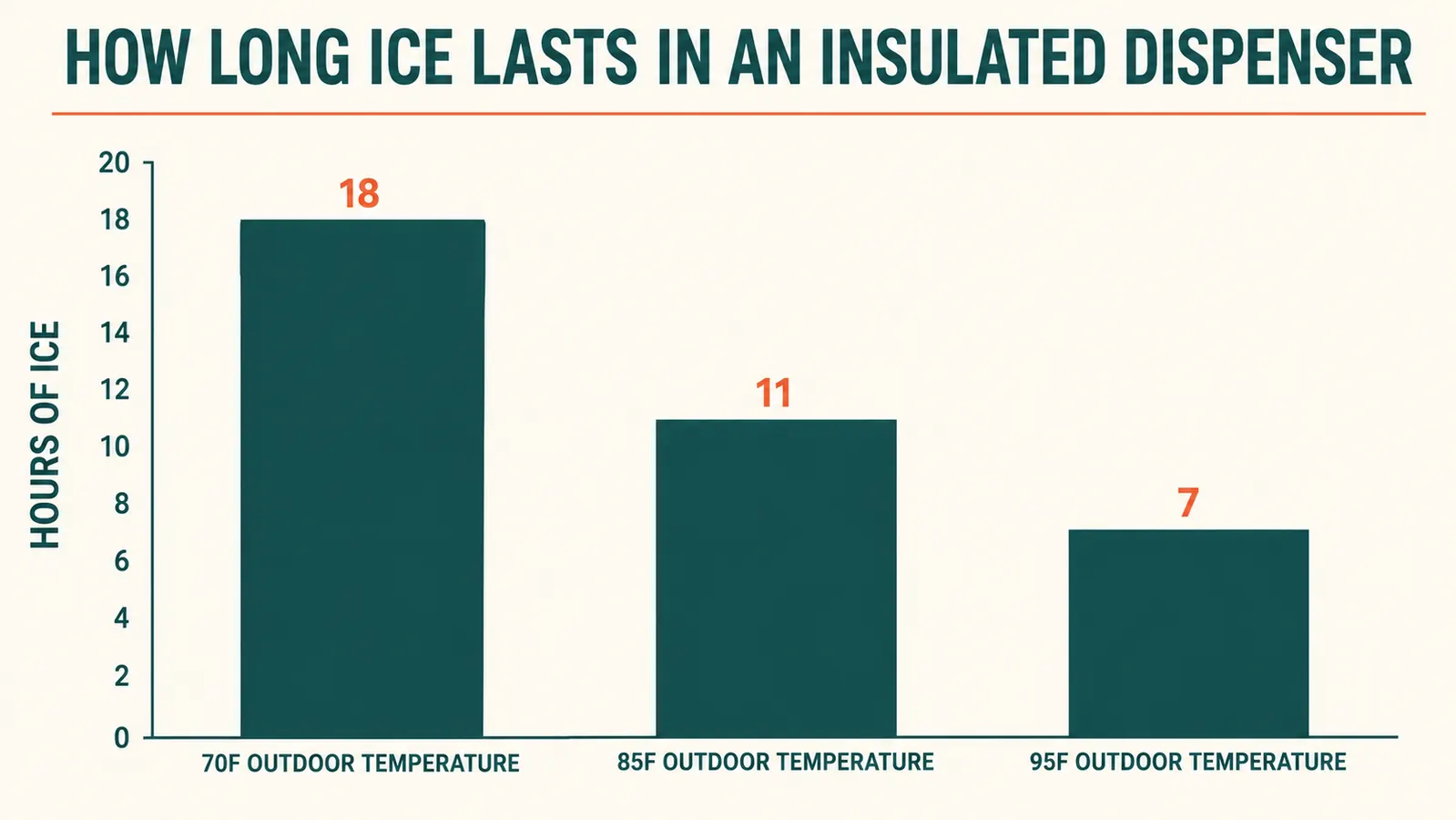
When the water level gets low in the afternoon, I don't dump what's left and start over. I add a fresh block of ice and top off with cold water from the spigot or a jug I've kept chilled in the trailer fridge. That remaining cold water is already doing work, and starting from a partially cold base means the new ice doesn't have to fight room-temperature water from scratch. In practice, at outdoor temperatures around 70 degrees, a well-packed dispenser with block ice can hold genuinely cold water for close to eighteen hours before it needs any attention at all. At 85 degrees, that drops to somewhere around ten to twelve hours. Push it to a 95-degree afternoon like the ones I dealt with on Kentucky Lake, and you're looking at six to eight hours before a top-off is worth doing. Knowing that range means I can plan my top-offs around lunch and again before dinner instead of guessing, and I'm never caught pouring warm water into someone's cup right as they ask for a drink.
What Else Helps
A couple of small things round this out. I keep a second, smaller jug of drinking water in the trailer's own refrigerator as backup, so if the dispenser ever does run warm before I can top it off, there's still cold water on hand without a store run. I've also learned to fill the dispenser with filtered or treated water at any campground where the tap water tastes heavily of chlorine or minerals, since cold doesn't fix bad-tasting water, it just makes bad-tasting water cold. And I never let the dispenser sit fully empty and sealed overnight in hot weather. A splash of standing water left in a closed jug in the heat is exactly the kind of thing that turns musty by the next morning.
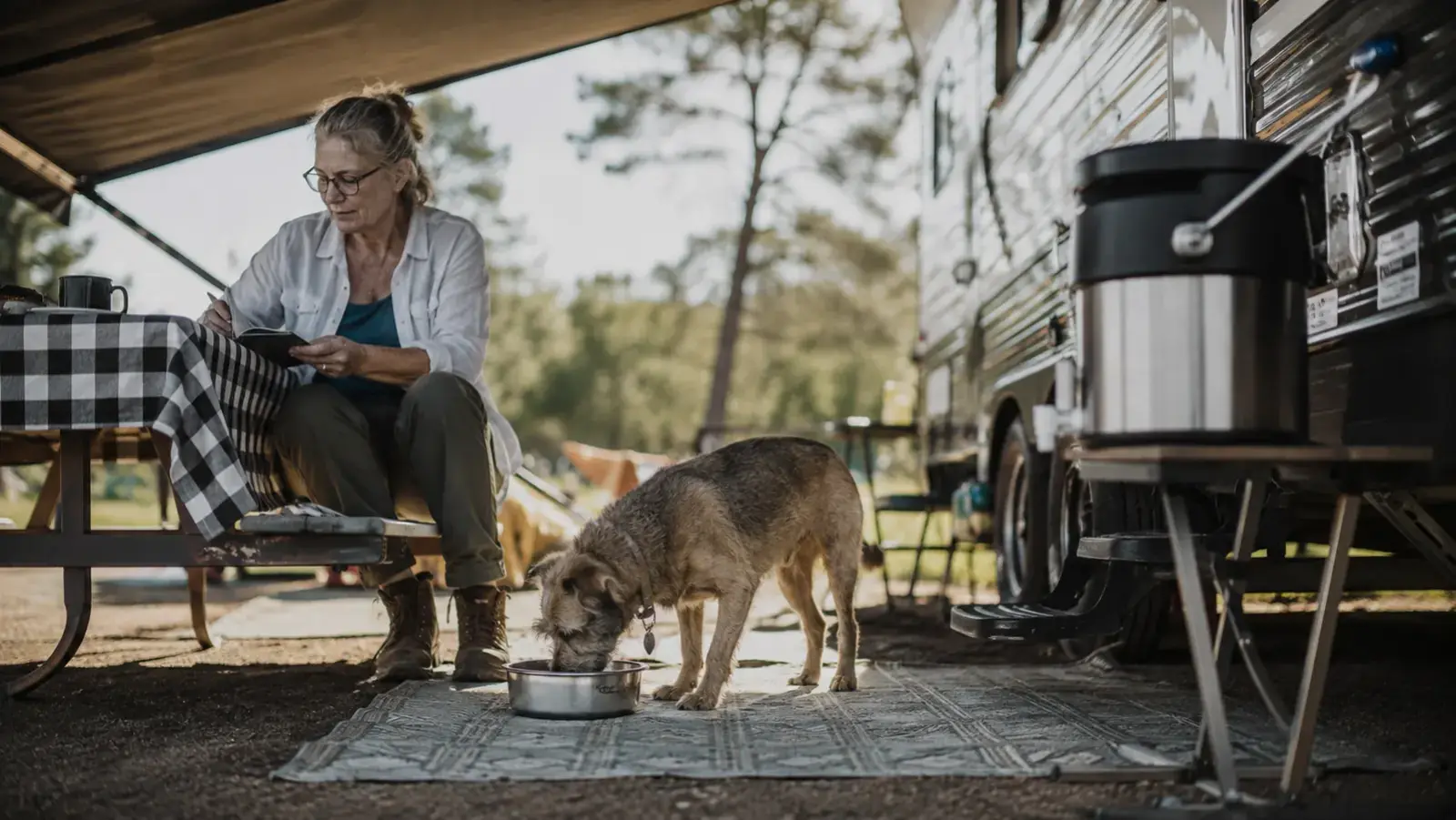
Biscuit gets his own consideration here too. Dogs overheat faster than we do, and warm water doesn't tempt a hot dog to drink as much as he needs to. I keep his bowl in the shade near the dispenser and top it off with cold water from the spout at the same time I'm refilling my own cup, several times through a hot afternoon rather than filling it once in the morning and forgetting about it. A dog that won't drink enough in the heat is a bigger problem than a person who won't, since he can't tell me he's thirsty until he's already in trouble. On the hottest days I'll even drop a small piece of ice straight into his bowl, which he treats like a reward and I treat like cheap insurance.
I didn't need a colder cooler. I needed to stop treating ice like something that takes care of itself once you dump it in.
The End-of-Day Drain and Dry
Every evening before I turn in, I drain whatever's left through the spout, rinse the inside with a splash of clean water, and leave the lid open or propped so air can move through it overnight. Skipping this step is how a perfectly good dispenser starts smelling musty by the third or fourth day of a trip, especially in humid weather. A dispenser that's rinsed and left open dries out completely by morning, and that's part of why mine has stayed odor-free through a full camping season of daily use, which I get into more in my full review of this dispenser, including the one thing about the spout I'd change if I could.
None of this takes special skill or extra gear beyond the dispenser itself. It's mostly just doing things in the right order and at the right time of day, the kind of habit that becomes automatic after a trip or two. I went from resenting the ice run every single afternoon to barely thinking about it, and that's really all I was after. A cold glass of water at four in the afternoon shouldn't require a drive into town, and now it doesn't.
Give yourself one less thing to think about at camp.
This is the same insulated dispenser I fill every morning, spout and all, and it holds cold water a full day when you follow these steps.
Amazon Check Today's Price on Amazon →