I still own a tent. It lives in the outside pass-through of my trailer, rolled up tight, and most seasons it comes out zero times. That is not because tents are bad. It is because most of what I actually need at a campsite during the day, somewhere to lie down, somewhere shaded, somewhere that does not require kneeling on the ground to get in or out, a hammock does better. This list is not me telling you to throw your tent out. It is me telling you, honestly, the ten reasons the Wise Owl hammock is the piece of gear I reach for first every day I am at camp, and the tent is the piece of gear I reach for only when I truly need overnight shelter somewhere without my trailer.
I set up camp alone now, which changes how I judge every piece of gear I own. Twenty-eight years of driving a school bus taught me that if a job needs two people, it isn't a job I can count on. Here is where the Wise Owl hammock earned its spot over the tent, one reason at a time.
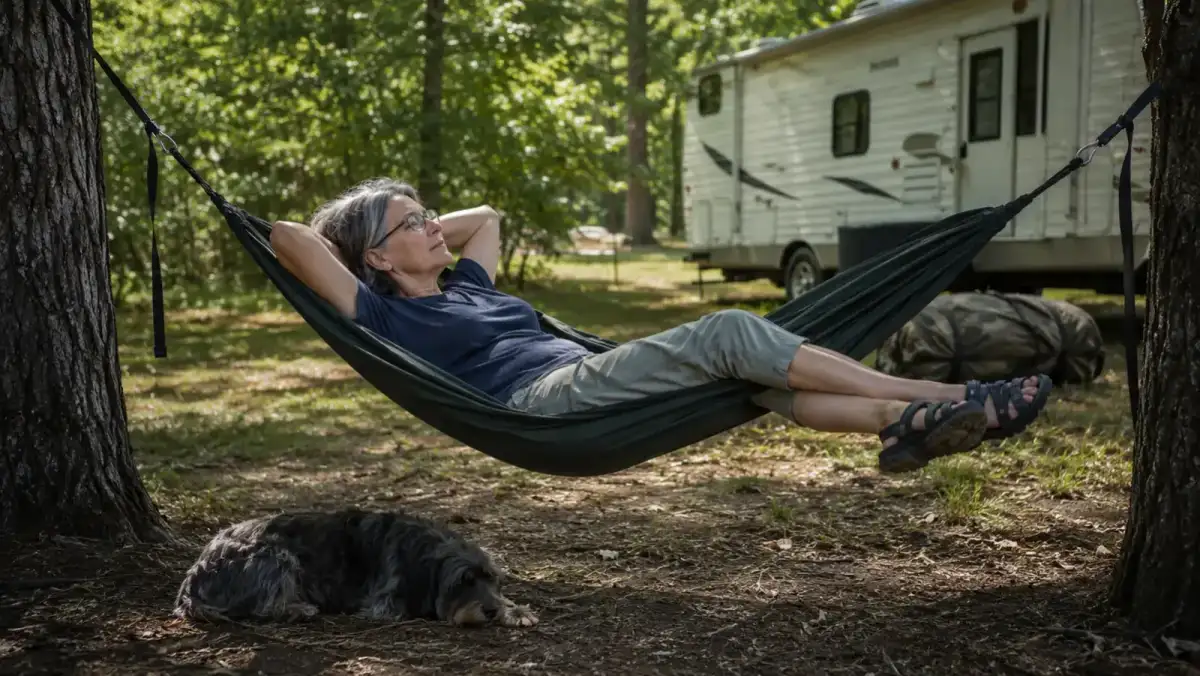
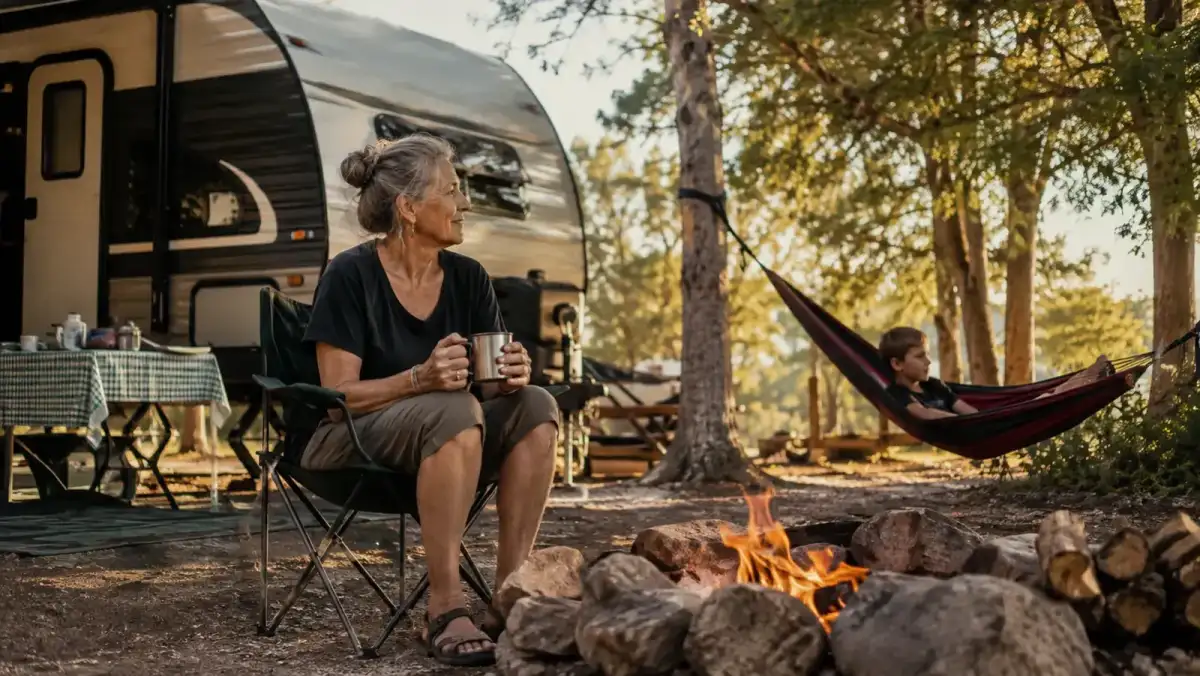
Before the list, here is the hammock doing all ten of these things at once.
Tree straps included, packs down to a grapefruit, hung solo at nearly every campsite I've stayed at this year.
Amazon Check Today's Price on Amazon →You Skip the Kneeling Altogether
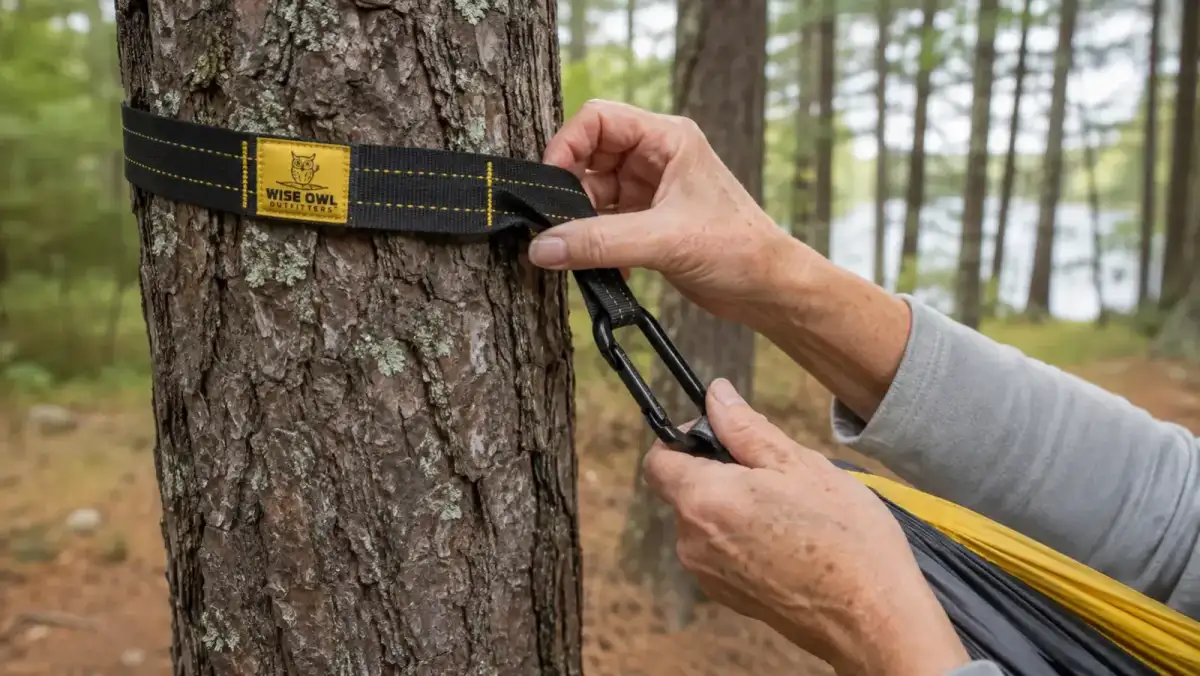
Pitching my old tent means getting down on the ground on hands and knees to drive stakes, then hands and knees again to unroll the footprint and check the corners, then finally low enough to crawl in through the door flap. Some mornings, getting back up off the ground afterward has been the whole workout. The Wise Owl hammock skips every bit of that. I wrap the tree straps at chest height, clip in the carabiners, and I'm never any lower than standing until I choose to lie down in it. My knees only bend once, to climb in, and gravity does the rest.
One Person, Under Ten Minutes
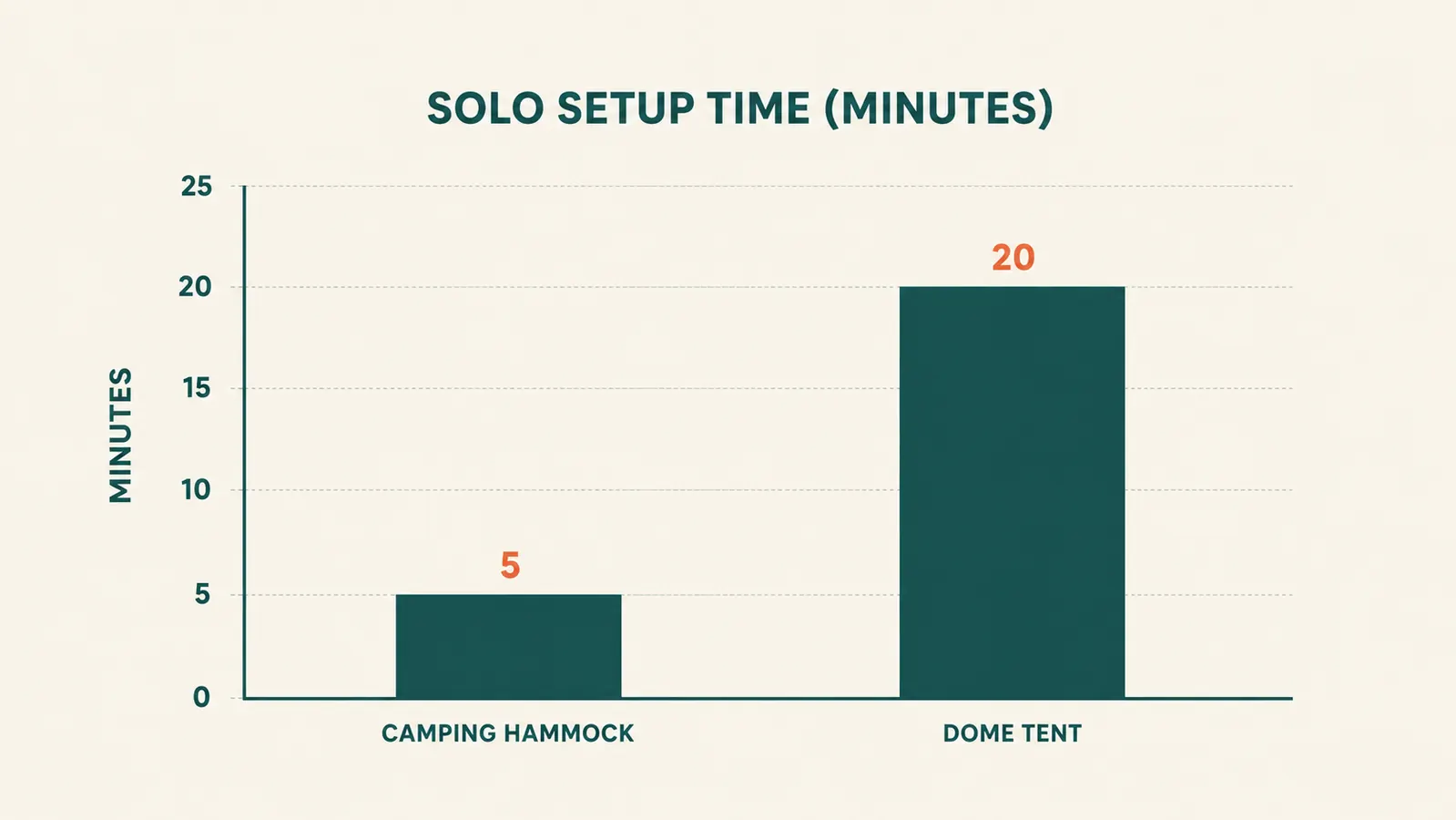
I hung this hammock for the first time at a Corps of Engineers campground on Kentucky Lake, a mid-week stay with the whole loop nearly empty, and it took under ten minutes start to finish with nobody there to help me. That is not a small thing when you camp alone. A dome tent wants two sets of hands, one to hold the poles steady while the other threads them through, and I have done that job solo enough times to know it is fussy and slow. Two straps, two trees, two clips. That's the entire process.
It Doesn't Care What the Ground Looks Like
Some campsites hand you a gravel pad and call it good, others are all roots and slope, and a couple of state park sites I've stayed at didn't have six level feet anywhere near the fire ring. A tent needs flat, clear ground or you spend the whole afternoon sliding downhill. The hammock only needs two trees roughly the right distance apart. I've hung it over exposed roots, over a slope steep enough that a tent would've been useless, and over gravel that would have torn up a tent floor in one weekend.
It Packs Down to the Size of a Grapefruit
My tent, even packed tight, takes up real space in the trailer's outside storage, space I'd rather use for camp chairs or Biscuit's supplies. The hammock compresses into a stuff sack about the size of a large grapefruit and weighs next to nothing. It rides in a side pocket I can reach without unloading anything else, which means I actually bring it every single trip instead of leaving it behind because digging it out wasn't worth the trouble.
It Follows the Shade, a Tent Never Moves
A tent goes up once and stays exactly where you put it, sun moving overhead the whole day whether the tent likes it or not. By early afternoon at a lot of sites I've stayed, that tent is sitting in full sun and it's an oven inside. The hammock takes five minutes to move. If the shade shifts, I move two straps to a different pair of trees and I'm resting in the cool again. I plan my afternoons around where the shade will be next, not around where I happened to stake something that morning.
Nothing Crawls Up Off the Ground With You
Ground level is where the ants find you, where a damp night leaves everything under a tent floor smelling like a basement by morning, and where anything that crawls at camp is going to crawl across you eventually. Being a few feet up in the hammock puts all of that underneath me instead of next to me. It's a small thing until the first time you're not dealing with it anymore, and then it's the thing you notice most.
It Doubles as the Overflow Bed When Someone Visits
When my daughter and her kids come through for a weekend, my trailer sleeps me and not much else. I used to drag the old tent out for the extra bodies, stakes and poles and all of it, for one weekend a year. Now the hammock does that job. It's up in ten minutes near the fire ring, it's comfortable for one adult or a kid who thinks sleeping in a hammock is the best part of the whole trip, and it comes down just as fast when everyone heads home.
It's Rated for More Weight Than I'll Ever Need
The rated capacity is up to 500 pounds, which is more than I need on my own, but it means I never think twice about climbing in fully dressed with boots on, or with a bag of camp gear I didn't feel like setting down first. It also means Biscuit can hop up and share the space without me worrying the straps are anywhere near their limit.
Biscuit Gets a Nap Spot Too
Biscuit worked out early that hammock time means nap time and usually flops down in the shade right underneath me instead of the two of us being separated, me resting inside a tent and the dog outside wondering where I went. With the hammock we're in the same spot, same shade, same stretch of afternoon. It's a small companionship thing I didn't expect to matter as much as it does.
It's Honest About What It Won't Do
I want to be straight with you here. This hammock does not replace a tent if you need real overnight shelter from a hard rain, or privacy for changing clothes, or a sealed space to keep the bugs out while you sleep for eight hours in bad weather. That is still a tent's job, and I still own one for the handful of times a year I actually need it. What the hammock replaced was everything else, the daytime rest, the overflow bed, the quick nap, which turned out to be most of what I actually used the tent for anyway.
What I'd Skip
If you're thinking about trying this yourself, here's what I'd skip. Skip straps that are thin and rope-like instead of wide webbing, because thin straps can cut into bark and they're murder on your palms while you're tightening them. The wide tree straps that come with this one spread the load and haven't marked a single tree I've hung from. Skip hanging it stretched too tight and flat, which puts pressure across your shoulders instead of your back. A gentle sag, sitting more than lying straight, is what makes it comfortable for hours instead of minutes. And skip counting on it as your only shelter if real weather is coming. I still keep the tent packed for that. The hammock is for everything else, and everything else turns out to be most days.
The tent still has a job. It just isn't the job I actually needed most days at camp.
If you want the full rundown on how this hammock held up after a whole season of daily use, I wrote that up in my long-term review. And if you're ready to hang your own, I walked through the exact steps, tree spacing included, in how to hang a camping hammock from trees.
Ten reasons, one piece of gear. Same straps, same hammock, every campsite I've hung it at.
Packs down small enough to bring every trip, rated to 500 pounds, up in under ten minutes alone.
Amazon Check Today's Price on Amazon →