My back and I had an understanding for about thirty years, and then somewhere around the time I turned sixty-six, it broke that understanding without any warning. It wasn't the driving that did it. Twenty-eight years behind the wheel of a school bus, and my back held up fine through all of that. It was the camping itself, the part I was supposed to be able to do forever, the part I do most of the year now that I'm retired and pulling my 24-foot trailer from one state park to the next with Biscuit riding shotgun. The Wise Owl hammock that rides in my pass-through bay now is the reason that sentence has a different ending, though I would not have believed that the day I ordered it.
Setting up camp alone is a lot of bending. Leveling the trailer, cranking the stabilizers, hauling out the folding chairs, kneeling to hook up the water. Breaking camp is the same thing in reverse. By the second day at most sites, my lower back had had enough, and the only relief I knew was climbing back up the trailer steps to lie flat on the bed for twenty minutes. Some afternoons I did that four or five times, which meant four or five extra trips up and down steps that weren't doing my knees any favors either.
I want to be honest about something before I go any further. I am not the kind of camper who needed a hammock for the romance of it, swinging under the trees with a good book the way the catalog photos show. I bought the Wise Owl Outfitters camping hammock because I needed somewhere to lie down flat, outside, without climbing stairs to do it. That's the whole reason I picked it up. Everything else it turned out to do for me was a bonus I hadn't gone looking for.
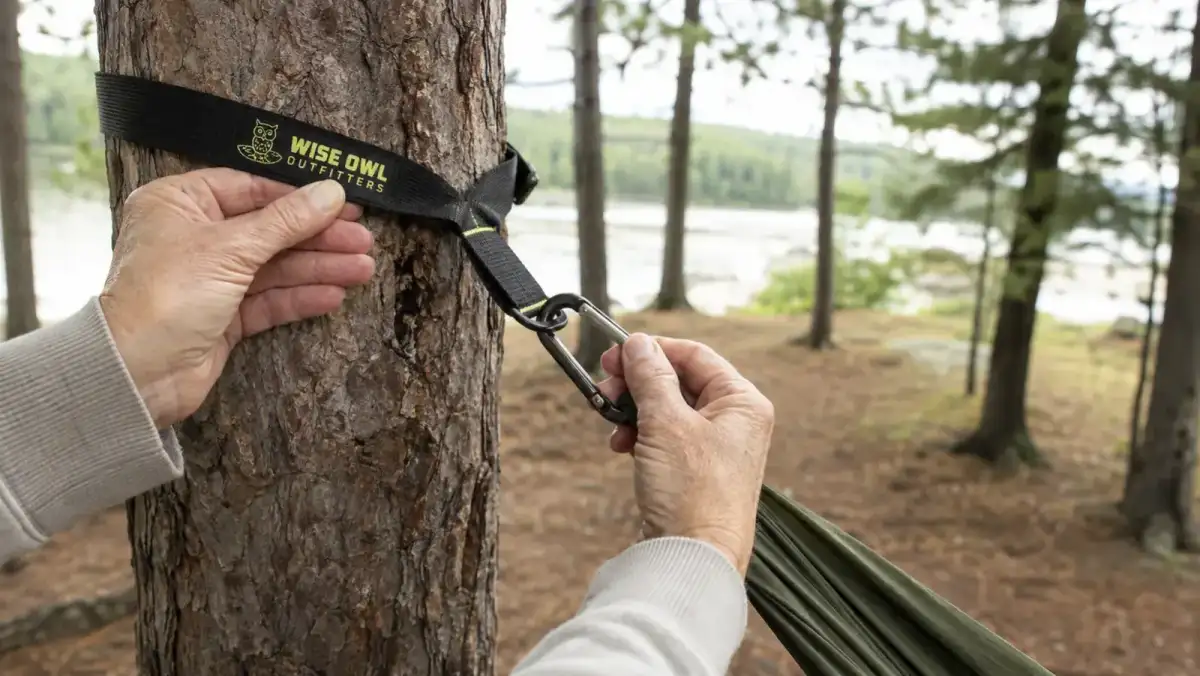
I first hung it at a Corps of Engineers campground on the Kentucky Lake shoreline, a mid-week stay in April when the crowds hadn't shown up yet and I had most of the loop to myself. I'd read that the tree straps made setup a one-person job, and I needed that to be true, because there's no one else here to hold the other end of anything. I picked two pines about twelve feet apart, wrapped the straps around at chest height, clipped in the carabiners, and had the whole thing hanging in under ten minutes.
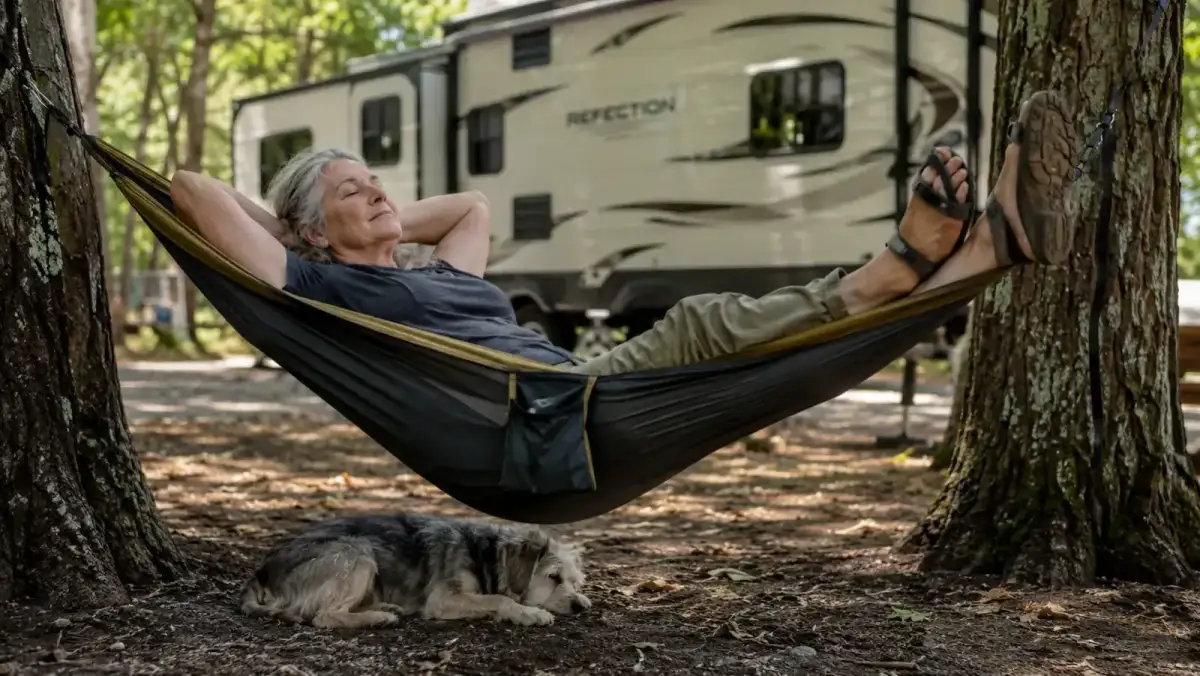
What surprised me was how much it changed the middle of my day, not just the end of it. Before, that afternoon crash meant retreating into the trailer, away from the fire ring, away from Biscuit sniffing around the site, away from whatever I'd come outside for in the first place. Now I climb into the Wise Owl hammock instead, feet up, spine finally allowed to just hang there and stop bracing, and I'm still outside. Biscuit has worked out that this is nap time and usually flops down in the shade underneath me, which is its own small mercy on a warm afternoon.
I didn't need something lighter. I needed something that let one tired person lie down flat without a single set of stairs involved.
If your back is doing the deciding on whether you camp anymore, start here.
This is the exact hammock I hang at nearly every site now, tree straps included, and it packs down small enough that I never think twice about bringing it.
Amazon Check Today's Price on Amazon →It didn't fix my back. I want to be clear about that, because I've read plenty of gear pages that promise more than a piece of fabric between two trees can honestly deliver. I still take it slow on setup mornings. What the Wise Owl hammock did was give me a way to rest that didn't cost me anything extra, no stairs, no chair to wrestle out of, no arm to push myself up on. Lying flat with even weight across my whole back turned out to matter more than I expected. A folding chair never let my spine straighten out the way the hammock does.
I've since used it at four different state parks and two more Corps campgrounds, always mid-week, always the same two straps around whatever trees are standing there. The rated capacity is up to 500 pounds, more than I needed, but reassuring the day I climbed in fully dressed, boots still on, because I was too tired to bend down and take them off first.
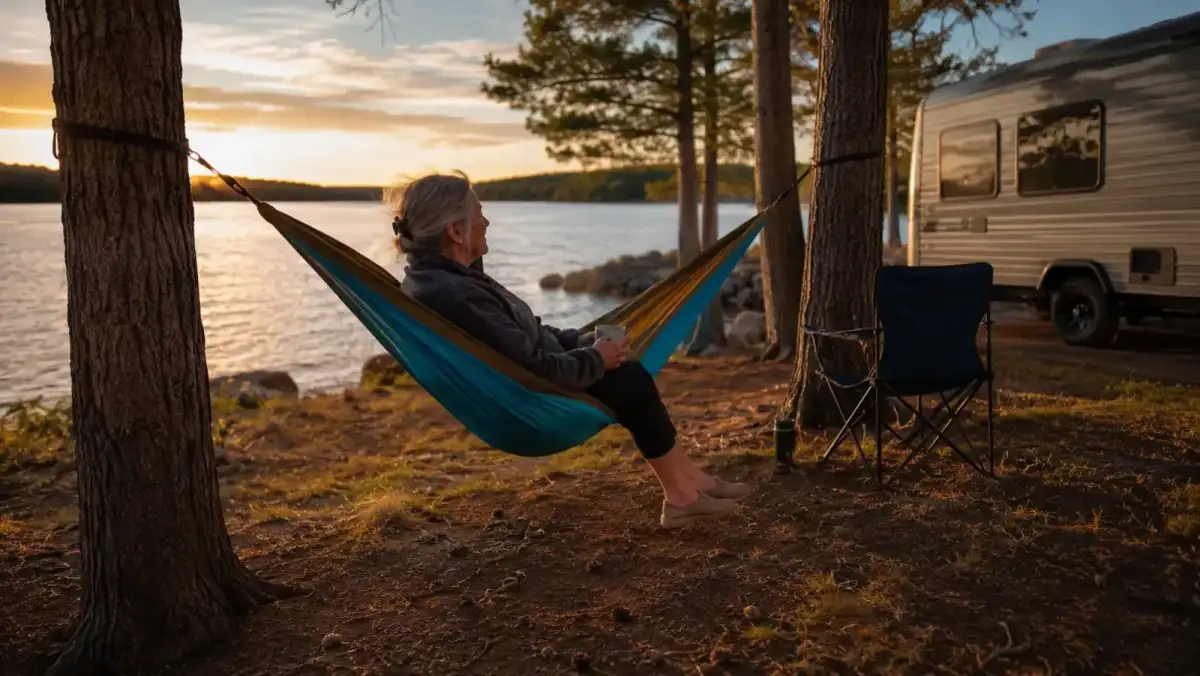
The other thing nobody tells you about camping alone as you get older is how much of the day gets planned around avoiding pain rather than around enjoying yourself. I used to map my afternoons by how many more trips up those trailer steps I had in me. Now I plan around when the shade moves, because the hammock goes where the shade is and I go with it. That's a small thing to say out loud, but it changed the shape of my whole camping season.
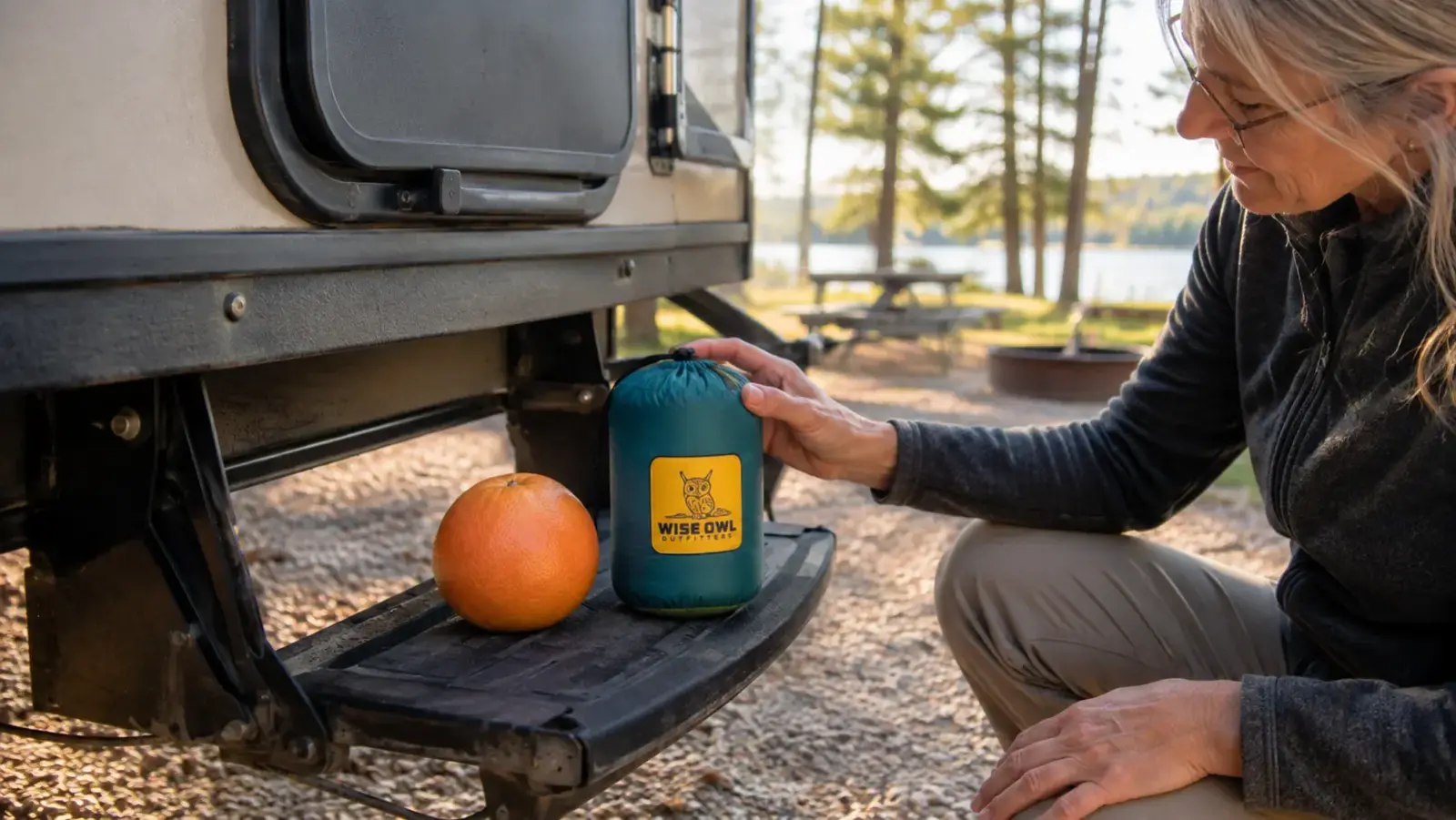
It packs down to about the size of a large grapefruit and weighs next to nothing, so it rides in the outside pass-through of the trailer where I can grab it without digging through anything else. I've hung it in pine, oak, and one stubborn cedar that made me move ten feet down the site to find two trunks close enough together. The straps have never slipped on me, not once.
What I'd Tell You If We Were Sitting at My Kitchen Table
If your back is the reason you're wondering whether camping season is winding down for you, I wouldn't tell you to buy anything expensive or complicated. I'd tell you to get something you can hang by yourself in ten minutes and lie down flat in without an audience or a helper. That's really all this is. It isn't going to cure a bad back, and I'm not going to pretend it did mine. But it gave me a way to rest at the campsite instead of retreating from it, and some seasons that's the difference between going out again next month or deciding it isn't worth the trouble anymore. I wrote up how a hammock stacks up against a tent for an afternoon rest in my piece on that comparison, and if you want the fuller rundown of how this one has held up after a whole season of daily use, that's in my full review, cons included.
Give your back one thing this season that doesn't ask anything of it.
Same hammock, same tree straps, packed down small enough to live in the trailer permanently.
Amazon Check Today's Price on Amazon →