
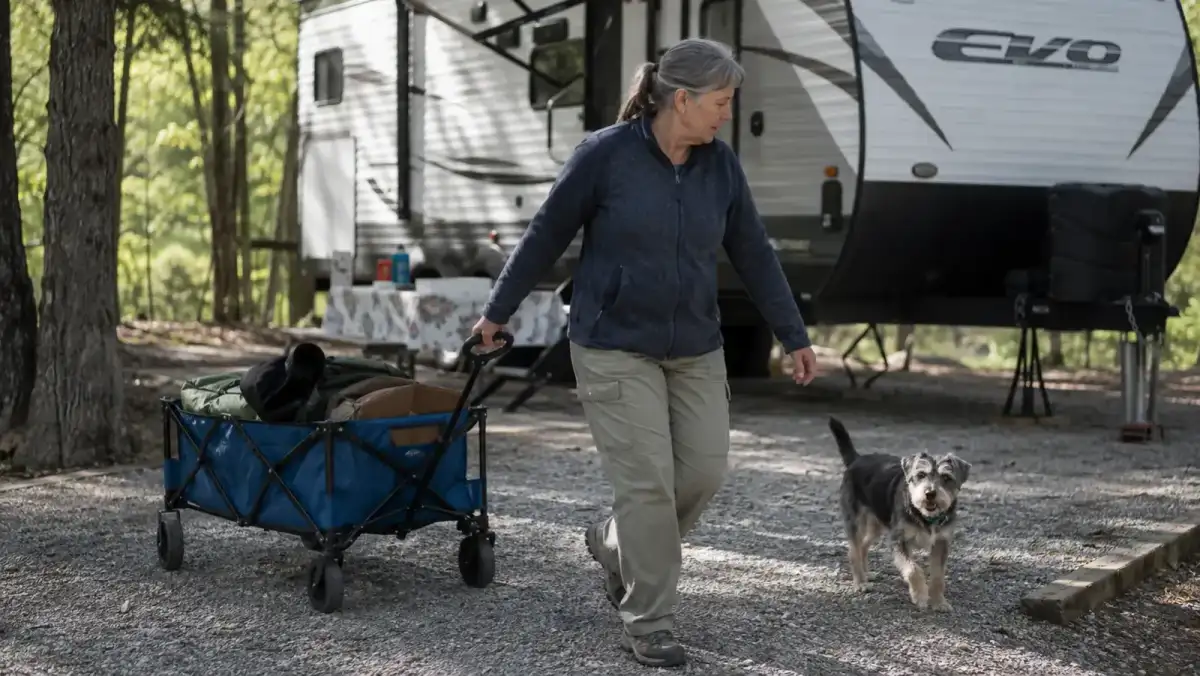
I bought this wagon in April of last year at a Corps of Engineers campground on Kentucky Lake, and I do not mean I bought it there literally. I mean that was the trip where I finally admitted I could not keep carrying two camp chairs, a cooler, and a bag of Biscuit's food across a gravel loop in three separate walks and call that a system. I was sixty-five then, camping alone since my husband passed, and my arms were doing math my back did not agree with. I ordered the Mac Sports heavy duty folding wagon before I even left that campground, and it has been in the trailer's pass-through bay ever since.
That was fourteen months ago now. I have pulled this wagon across gravel pads, wet grass, packed dirt, and one stretch of honest-to-goodness sand at a lakeside site that I will never park in again without a wagon like this one. This review is not about how it felt the first week. Plenty of gear feels fine the first week. This is what fourteen months and roughly six different campgrounds actually did to the wheels, the fabric bed, and the fold, because that is the part nobody tells you until it is your problem.
The Quick Verdict
After a full season of solo hauling, it still rolls the way it did on day one. The fabric has held its shape better than I expected, and the fold has gotten easier, not harder, with practice.
Amazon Check Today's Price →Stop making three trips from the truck when one wagon load will do it.
This is the exact Mac Sports wagon I have pulled across gravel, grass, and sand for over a year now, still folding flat into the trailer bay every single time.
Amazon Check Today's Price on Amazon →How I've Used It
I am not testing this wagon for a magazine. I am hauling my actual gear to my actual campsites, the same six or seven pieces of equipment every single time I set up camp alone. That means the cooler, two folding chairs, the water jug, Biscuit's bowl and bag of food, and whatever firewood I have picked up on the way in. Some trips it is loaded down further with a folded tarp or an extra blanket for the cold nights at higher elevation state parks.
I use it every time I make camp and every time I break it. That is not once a month. Between April of last year and this June, I estimate I have folded and unfolded this wagon somewhere north of two hundred times, and pulled it loaded a comparable number of trips, sometimes fifty or sixty feet from the truck to the site, sometimes a couple hundred feet down a campground loop road when the site I wanted was the walk-in kind with parking off to the side.
This wagon is rated for a 150 pound capacity, and I have never come close to testing that ceiling on purpose, but I have a fair idea what a full load actually weighs. A loaded cooler alone can run thirty to forty pounds with ice and food in it. Add two folding chairs, a full water jug, a bag of dog food, and a small armload of firewood, and I am routinely somewhere in the sixty to eighty pound range without ever thinking twice about whether the frame could handle it.
I have used it at the Kentucky Lake Corps of Engineers campground twice now, at four different state parks, and at two more Corps campgrounds since. Every one of those has a different ground surface. That variety is exactly why a season of use tells you things a single weekend cannot.
The Wheels After a Full Season on Gravel, Grass, and Sand
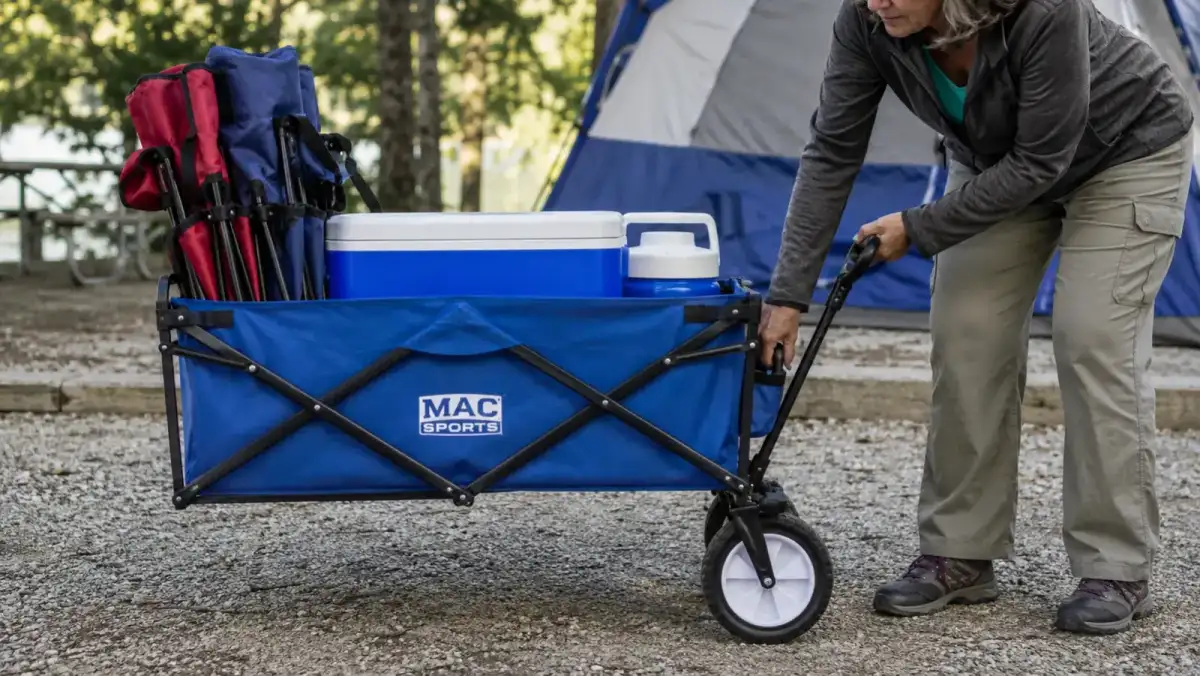
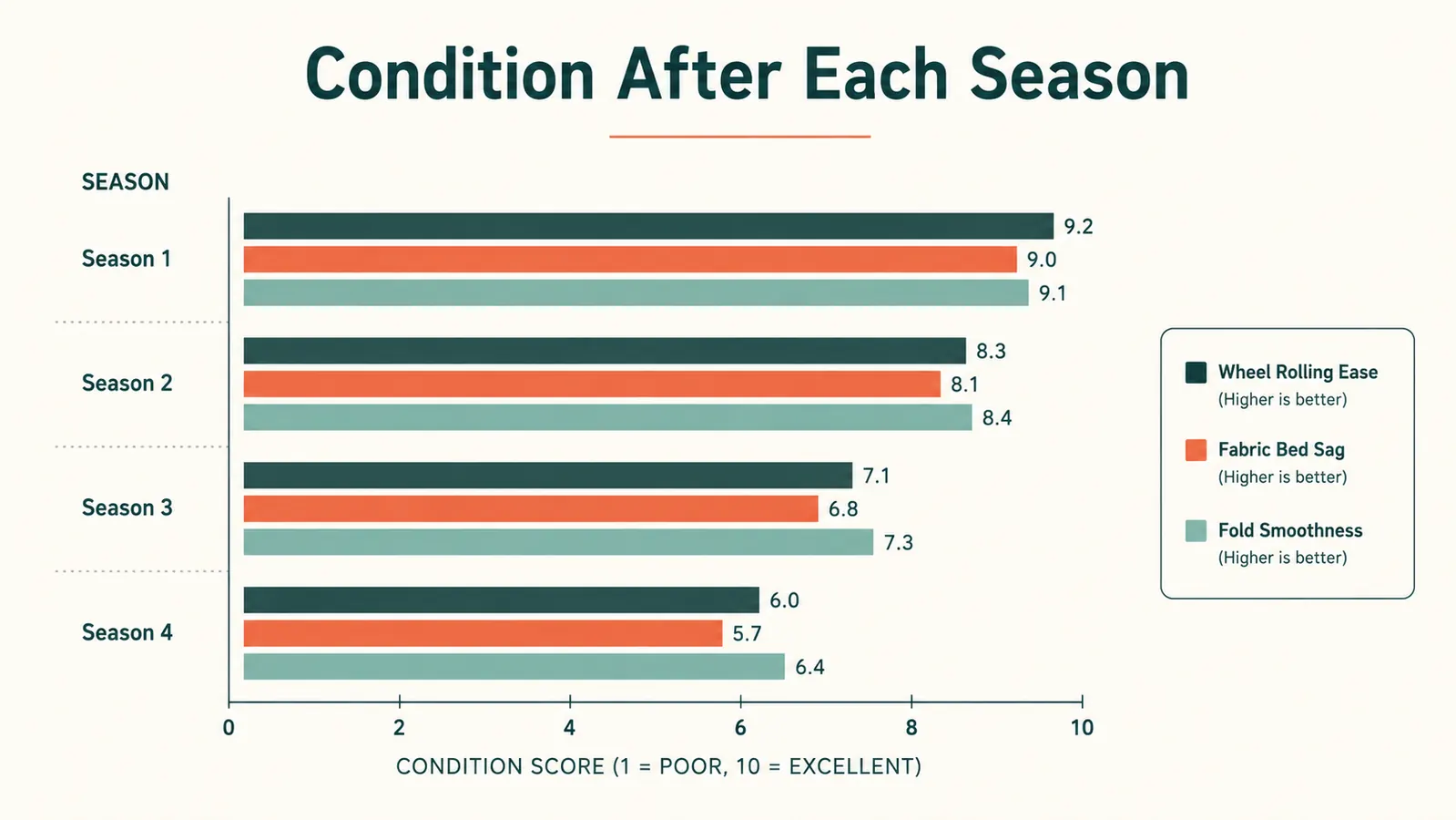
Gravel is where I worried most in the beginning, because the wheels on a folding wagon always look a little small and a little plastic when you first pull it out of the box. A full season later, the wheels still roll clean on packed gravel and on the crushed limestone pads most of my state parks use for tent and trailer pads alike. I have not had a wheel jam or bind up on me, not once.
Grass is where I noticed the wagon slows down when it is wet, which is honest to report rather than a flaw exactly. Heavy morning dew at a spring site in Kentucky meant I had to pull a little harder than usual, but the wheels kept turning rather than dragging or sinking, and nothing has bent out of true.
Packed dirt is where this wagon feels most at home, honestly, and most of my campground loop roads are exactly that, hard-packed clay and dirt with the occasional root crossing the path. The wheels handle the small bumps and washboard ruts without jarring the load loose, and I have never had the cooler bounce off the top of a full load on a dirt road the way I once worried it might.
Sand was the real test, at a lakeside Corps site last August where the access path to the water had gone soft. The wagon did bog down there, and I will not pretend otherwise. It is not built for deep sand the way a beach cart with oversized balloon tires is. But on the packed sand closer to the fire ring, it managed fine, and the wheels themselves have shown no cracking or wobble after all of that mixed terrain.
The Fabric Bed: Sagging, Holding, and What a Season of Loading Does to It
This is the part I watched closest, because fabric is the part I expected to fail first. A canvas-style bed stretched between a steel frame is going to sag some under a real load, and mine does sag a little in the middle when I load the cooler dead center. That has been true since roughly the third or fourth month of use, not something that appeared overnight, and it has not gotten meaningfully worse since.
What matters more than the sag is whether the fabric has torn, frayed, or pulled away from the frame attachment points, and mine has not. I load this thing heavier than the average trip to the farmer's market, sometimes forty or fifty pounds between the cooler and the firewood, and the seams have held every time. I did learn to load the cooler slightly off center rather than dead middle, which keeps the sag from concentrating in one spot and seems to spread the wear more evenly across the bed.
The one place I do see real wear is where the fabric rubs against the frame hinges when the wagon folds. There is a faint worn patch there now, visible if you look, but it has not become a hole or a weak spot after fourteen months, and I do not expect it to based on how slowly it has progressed.
The Fold Itself, After Hundreds of Cycles
A folding mechanism is the thing I worry about most on any piece of camp gear, because I have owned folding chairs and folding tables that got stiffer and stickier every month until I gave up on them entirely. This wagon has gone the other direction. The fold was a little stubborn the first handful of times, the kind of stiffness you expect from anything brand new, and it has loosened up into something smoother and faster the more I have used it.
I can now unfold it, click the frame into place, and have it ready to load in under a minute, without kneeling and without needing a second set of hands. That last part matters more to me than almost anything else on this list, because I set up camp completely alone. If a wagon needed someone standing on one end while I wrestled the other, I would have returned it in the first month regardless of how well the wheels rolled.
Folding it back down after a long day is where I have noticed the only real change over time. The hinges have gotten a touch looser, not loose enough to worry me, but enough that I sometimes have to guide the frame the last few inches rather than have it snap shut entirely on its own the way it did new. I keep a small can of dry lubricant in the trailer now and give the hinges a light spray every couple of months, which has kept that looseness from progressing any further.
Does It Still Fit in the Trailer Bay
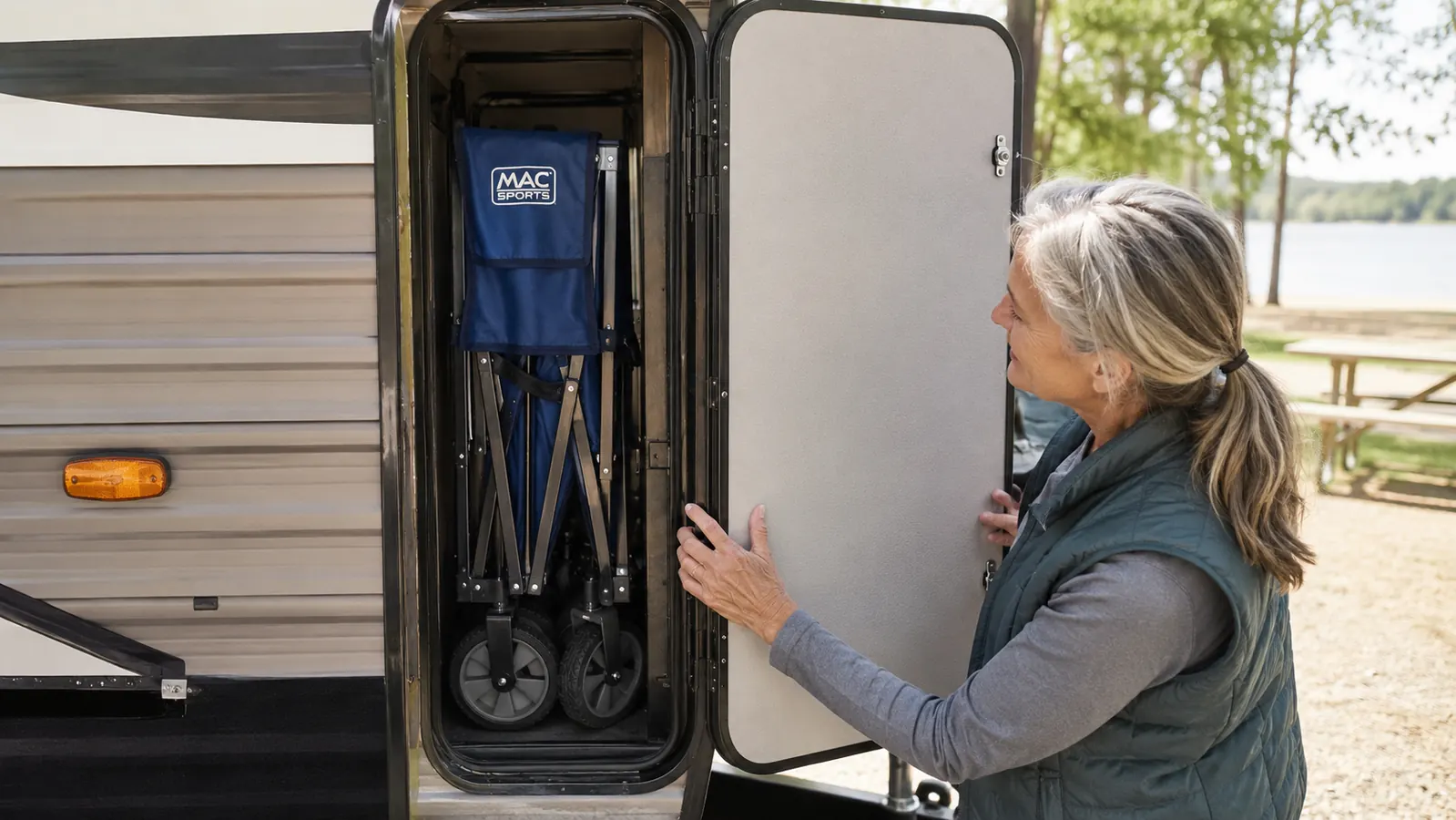
This was my first real question before I even bought it, because a wagon that will not fit back in your storage space is a wagon you will stop bringing. Folded flat, this one slides into the pass-through storage bay of my 24-foot trailer with room to spare on either side, right alongside the folding chairs and the leveling blocks. That has not changed after a season of use. It folds down to the same footprint it did the day it arrived, which tells me the frame has not warped or spread under load the way a cheaper folding frame might over time.
I will say the wagon does pick up a fine layer of trail dust in that bay, which transfers to whatever else is stored near it. I have started keeping an old towel folded underneath it, more for the other gear's sake than the wagon's.
What I Actually Haul in It on a Normal Weekend
On an ordinary two or three night stay, one load in this wagon gets my cooler, both folding chairs, the water jug, and Biscuit's food and bowl from the truck to the site in a single trip. On setup days when I am also bringing firewood from the camp store, I make two trips rather than stack everything precariously, mostly because I have learned that patience beats a spilled cooler on a gravel pad. Breaking camp reverses the same routine, and it is the breaking camp trips where I am most grateful for it, tired and ready to be done, not wanting to make four separate walks back to the truck.
On longer stays, a week or more at one of the state parks, I have used it for grocery runs from the truck too, hauling a week's worth of food and a case of water in from the parking lot near the camp store rather than making trip after trip on foot. That is not glamorous work, but it is the actual work a piece of camp gear either does for you or does not.
What I Liked
- Wheels still roll clean on gravel and packed dirt after a full season
- Fold has gotten easier and faster with use, not harder
- Folds flat to the same footprint as new, still fits the trailer's pass-through bay
- Handles a real load, cooler plus chairs plus firewood, without frame flex
- One-person setup and breakdown, no second set of hands needed
Where It Falls Short
- Fabric bed sags noticeably when the cooler sits dead center
- Slows down and can bog in soft or deep sand
- Hinges have loosened slightly and now need occasional dry lubricant
- A visible worn patch has developed where fabric rubs the fold hinges
I did not need it to be light. I needed it to still work the same way in month fourteen that it did in week one, and it has.
Who This Is For
If you camp alone, or you are the one who ends up doing the hauling even when you are not technically alone, this is built for exactly that job. It is for anyone who has stood at the tailgate looking at a cooler, two chairs, and a water jug, doing the math on how many trips that is going to take, and wishing there were a better answer. It handled a full season of that math for me without a real complaint. If your campsites tend toward gravel, packed dirt, or grass, which describes most state parks and Corps of Engineers campgrounds I have stayed at, the wheels are more than up to it. It is also worth having if you travel with a dog the way I travel with Biscuit, since a wagon frees up both hands for a leash on the walk in.
Who Should Skip It
If your regular camping spots involve soft beach sand from the parking area all the way to your site, this is not the wagon for that, and I would look at a wagon built with wider, softer tires specifically for sand instead. And if you are only camping once or twice a year with a short walk from a paved lot to your site, you may not need a hauling wagon at all, an armful of gear and a couple of trips will do the job just fine. This one earns its keep on repeat use, not on a single weekend a year. I put it up directly against a Radio Flyer in my comparison piece, and if you want the shorter list of reasons a wagon like this belongs at camp in the first place, I wrote that up too, in 10 reasons a camping wagon saves your back.
A full season of gravel, grass, and sand later, it still does the job.
The same Mac Sports wagon I have loaded and folded flat well over two hundred times now, still fitting in the trailer bay the same way it did on day one.
Amazon Check Today's Price on Amazon →