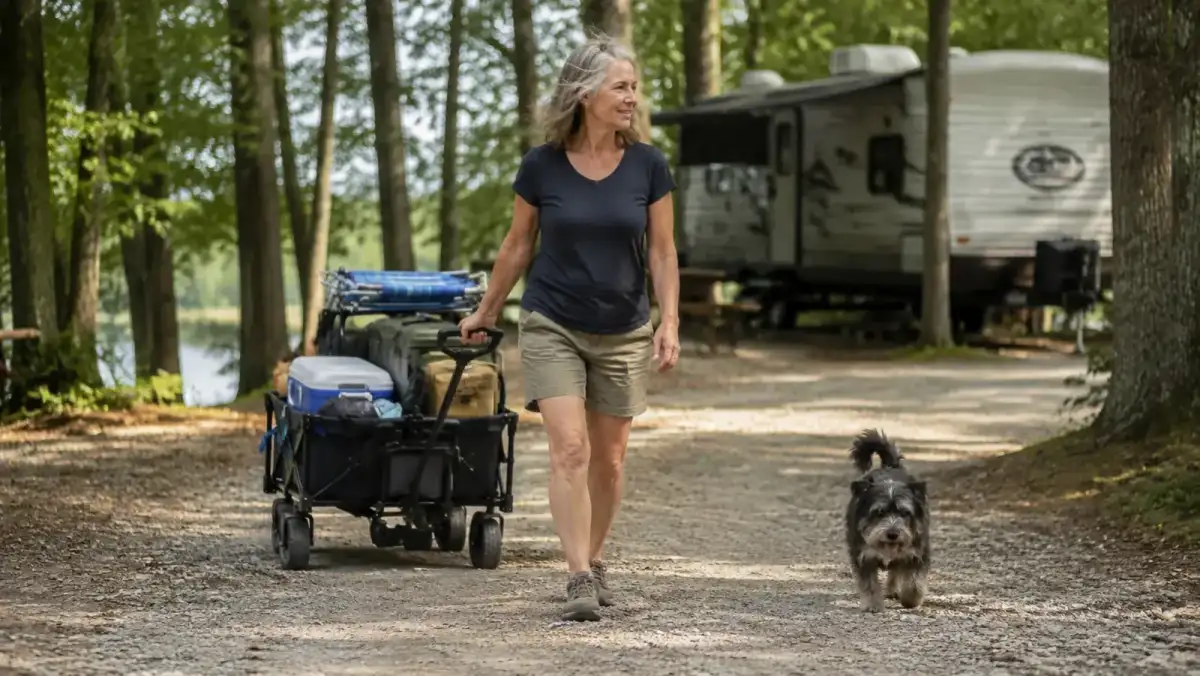
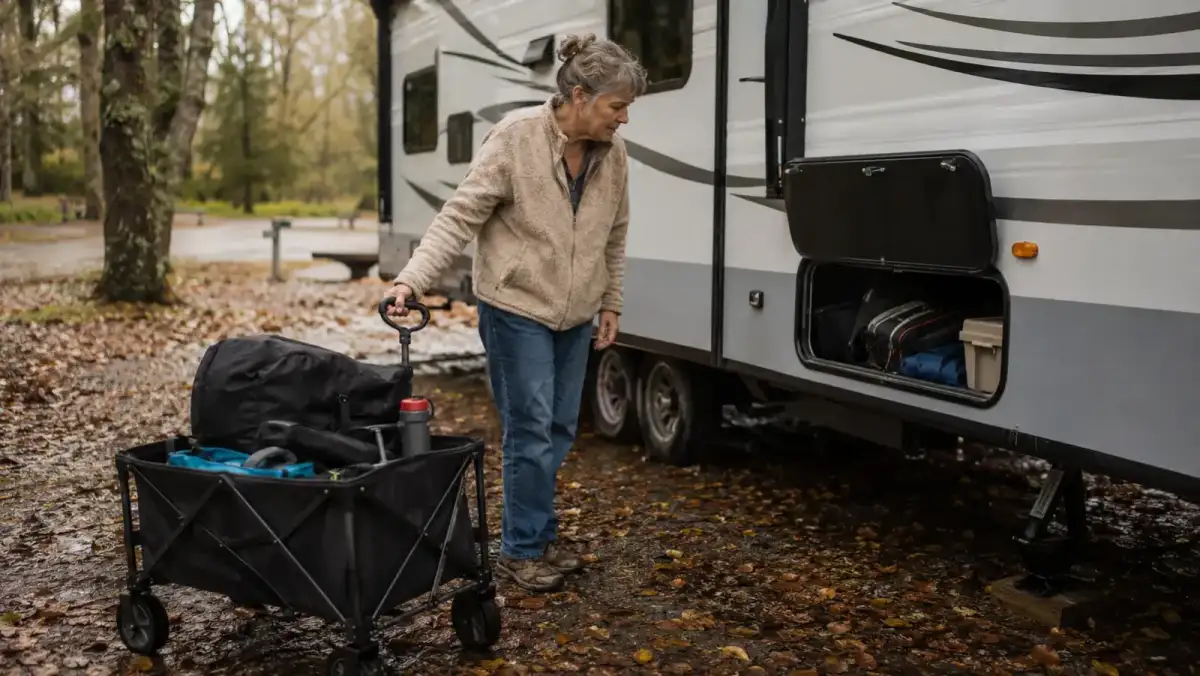
I bring a lot of gear from my truck to a campsite these days, more than I used to when my husband was still around to haul half of it, and less than I'd want to carry in armloads at sixty-six with a back that already tells me what it thinks about lifting. The parking pad at most state parks and Corps of Engineers campgrounds is never right next to the site. It's thirty, sixty, sometimes closer to a hundred feet away, uphill more often than I'd like, and that gap used to mean six or seven trips before I ever got camp set up. The Mac Sports collapsible wagon closed that gap down to one or two trips, and it's earned a permanent spot in the bed of my truck because of it.
Here are ten specific jobs this wagon does at my sites, not hypothetical ones, the actual chores that used to wear me out before I bought it.
If the walk from your truck to your site is the worst part of setting up, start here.
This is the exact folding wagon I've pulled at four state parks and two Corps of Engineers campgrounds, loaded far past what my arms could ever carry.
Amazon Check Today's Price on Amazon →The Walk From the Parking Pad to the Site
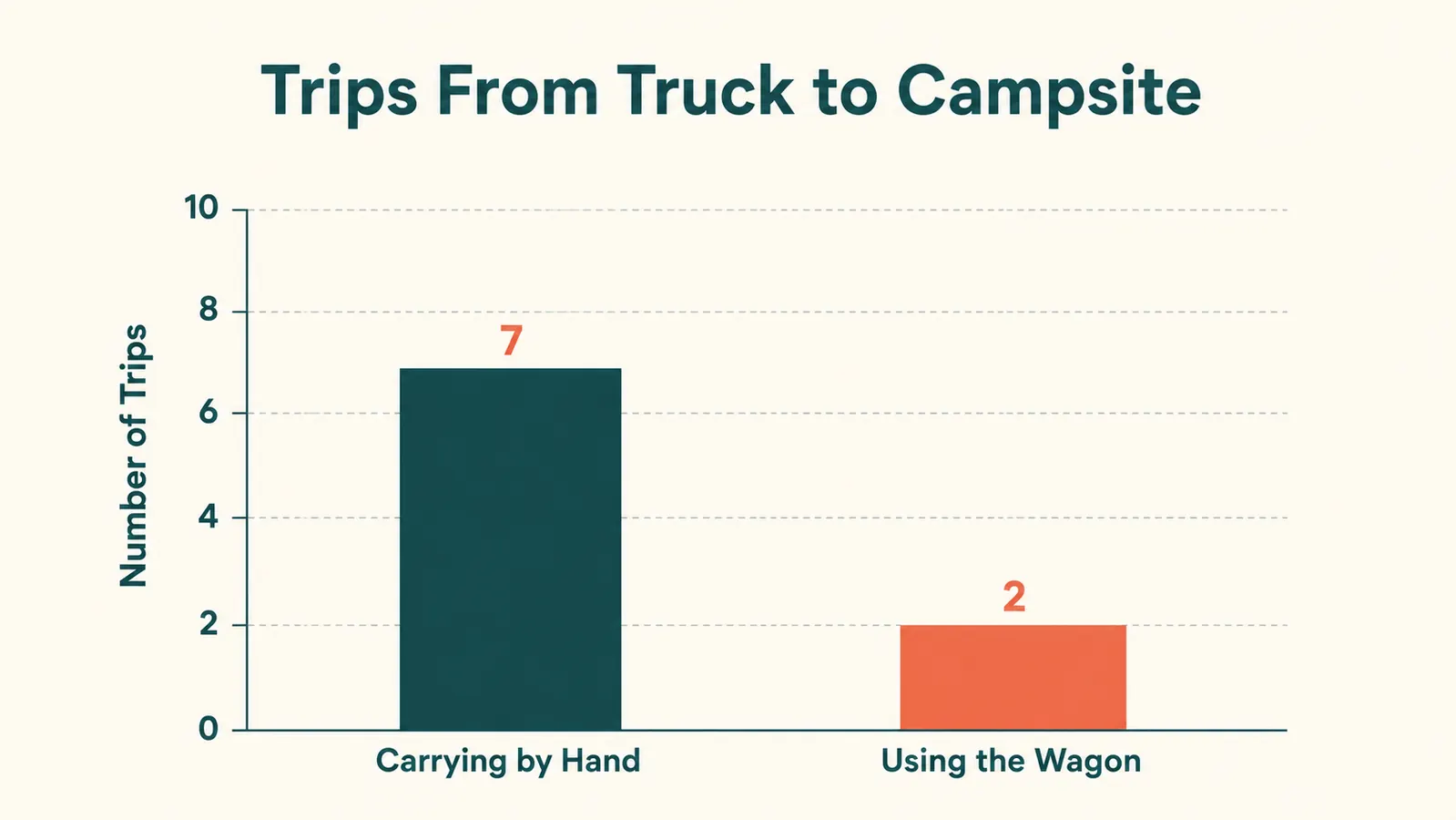
Most of the campgrounds I stay in put you a good walk from where you actually sleep. At my usual Corps of Engineers site on Kentucky Lake, it's close to eighty feet from the gravel pad to the fire ring, uphill both ways depending on which way I'm walking. I used to make that walk six times unloading the truck: coolers, chairs, the water jug, bags, Biscuit's crate, the works. Now I load the Mac Sports wagon once in the parking area, sometimes twice if I've overpacked for a long weekend, and pull the whole camp down in two trips instead of seven. My knees notice the difference as much as my back does.
Amazon See the wagon that cut my unloading trips from seven to two →
Firewood Runs Without Three Trips
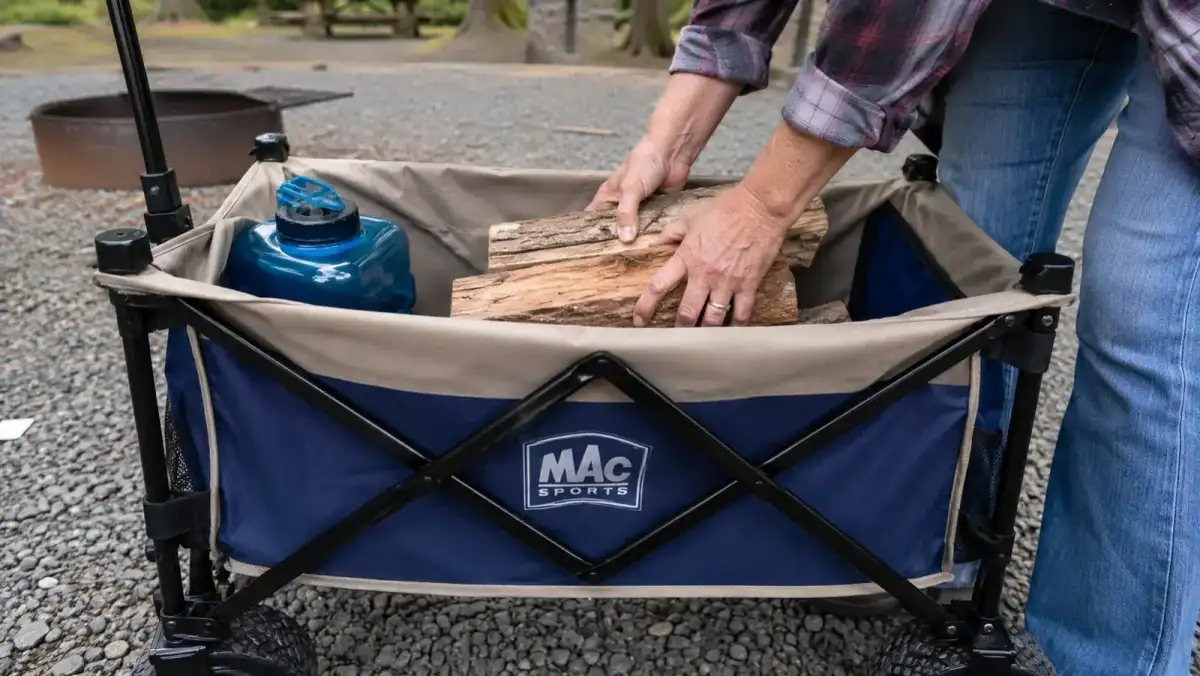
I buy firewood bundled at the camp store or gather what's allowed on site, and either way it adds up to more weight than I want carried in my arms, especially split oak with the bark still clinging to it. I used to stack wood against my chest and walk it back in loads of four or five pieces, which meant a lot of trips for one evening's fire. Now I fill the Mac Sports wagon bed once, haul the whole night's supply back in a single trip, and still have room left for kindling and the hatchet.
The Trash and Recycling Walk
Most campgrounds put the dumpster and recycling bins somewhere central, which is convenient for the campground and not always convenient for the person hauling three days of trash bags there on foot. I used to carry two bags at a time, bumping them against my legs the whole walk. Now I toss the bags in the wagon along with the recycling bin liner, roll the whole mess down in one pass, and come back with an empty wagon instead of an aching grip.
Hauling the Water Jug
A full water jug is heavier than it looks once you've filled it at the spigot and need to carry it back to the site. I've hauled mine both ways, arm-carried and wagon-hauled, and there's no comparison. I set the jug in the wagon bed, wheel it back over gravel and packed dirt without sloshing half of it out on myself, and I don't feel it in my shoulder the rest of the evening. It's the one chore I refuse to do the old way anymore.
Loading the Trailer Bay
My 24-foot trailer has a pass-through storage bay up front, and getting gear from the truck into that bay used to mean carrying awkward, bulky items one at a time across the campsite. The wagon lets me stack the folding chairs, the griddle, the tote of kitchen gear, and whatever else in one load, wheel it right up to the bay door, and unload straight from the wagon bed instead of setting things down on the ground first. I load it the same way every time now, heavy items low and centered, the order I laid out in my piece on loading a wagon for camp, so nothing shifts on the walk down. It's shaved a good twenty minutes off setup at every site I've used it at.
The Bathhouse Trip
Evening bathhouse trips mean a shower caddy, a towel, clean clothes, and usually my own toilet paper because campground bathhouses run out by Friday. None of that is heavy on its own, but carrying it all in an armload while walking gravel paths in the dark with a flashlight wedged under my chin got old fast. Now it rides in the wagon along with a folding stool I can leave outside the shower stall, and I walk back with both hands free to hold the flashlight properly.
A Second Table When I Need One
I didn't buy this wagon to be furniture, but it works that way in a pinch. When my folding table is already covered with the camp stove and dish bin, the wagon bed becomes a flat surface at a good height for setting down a cutting board, a coffee pot, or the bag of clothespins I'm digging through. It doesn't fold flat for that job the way a real side table would, but for a spot I didn't plan for, it holds its own.
Amazon Get a wagon that pulls double duty as extra surface →
Hauling Biscuit's Things
Biscuit doesn't travel light. His crate, his bed, his bag of food, his water bowl, and the tie-out stake all add up to more than I want balanced in my arms while he's pulling at the leash to smell everything in the parking lot. I load his gear in the wagon first, before mine, so he's settled and I'm not managing a dog and an armload of supplies at the same time. It's made the first ten minutes at a new site a lot calmer for both of us.
Amazon Get your dog's gear moved in without the juggling act →
Shoulder Season Leaf and Mud
I camp mid-week and off-season more than most people, which means wet leaves, soft ground, and mud that a stack of grocery bags does not handle well. The wide wheels on this wagon have gotten me through soft grass and muddy ruts at two different state parks in November without bogging down or tipping the load. I've had to give it a good push through the worst spots, but it hasn't stuck on me yet, and I've stopped avoiding shoulder season sites because of the ground conditions.
Amazon Keep hauling gear even when the ground turns to mud →
What It Saves Me Over a Season
I camp most of the year, not just a few weekends, which means the wear and tear from hauling gear by hand doesn't happen once or twice, it happens every single setup and every single teardown, all season long. Cutting my unloading trips from six or seven down to one or two, every time, at every site, adds up to a lot fewer sore mornings than I used to have. I can't put a number on what that's worth, but I can tell you I haven't gone back to carrying things in armloads since I bought it, and I don't plan to. For the wheels-and-latches specifics on how it's actually held up, that's in my full season review.
What I'd Skip
I won't tell you this wagon does everything right. The fabric bed sags a little under the heaviest loads, mostly full water jugs stacked on top of firewood, so I've learned not to load it past what it can hold its shape under. It's also not something I'd want to fold and unfold more than once or twice a day, the latches take a bit of getting used to and my hands aren't as quick with them as they used to be. And it's not a small item to store. It rides folded in my truck bed under a cover, and if you don't have truck bed space or an outside pass-through on your trailer, finding a spot for it takes some planning.
I stopped counting trips to the truck and started counting trips of the wagon instead.
Give yourself one less thing to carry this season.
Same wagon, same wide wheels, folds down small enough to ride in the truck bed at every site I pull into.
Amazon Check Today's Price on Amazon →