
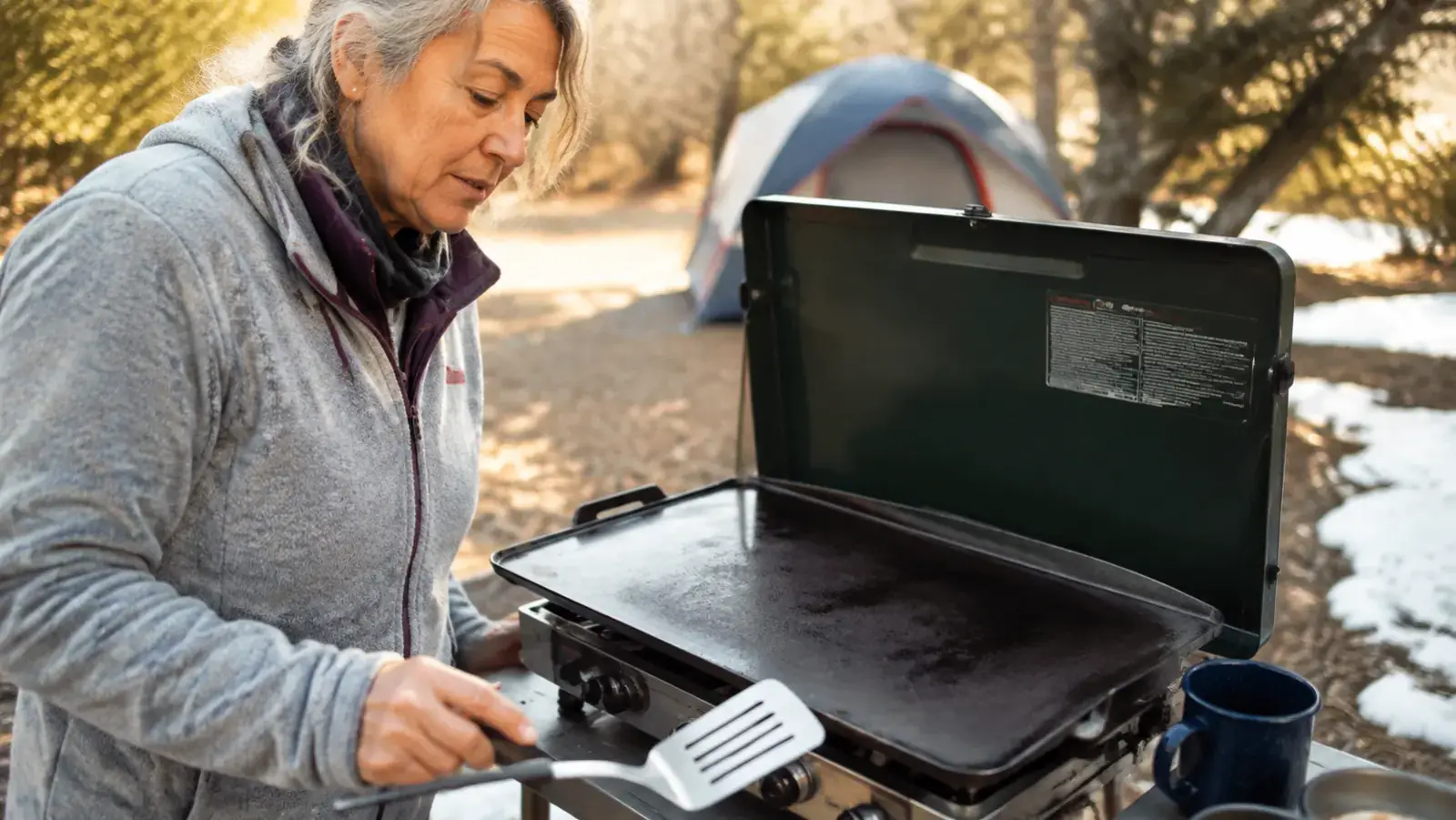
Every review of this Lodge griddle you'll find online reads about the same. Four and a half stars, someone's grandmother swears by it, somebody else says it cooks like a dream and leave it there. What none of them tell you is what actually happens the first month you own one, before the marketing gloss wears off and you're just a tired person standing at a camp stove trying to get breakfast on the table. I've been cooking on this griddle for three seasons now, and I like it, but I'm not going to write you the same clean review everyone else already wrote. There are things about this pan that nobody mentions, and a few of them would have changed how I set it up if I'd known going in.
This isn't the review that tells you it's perfect. It's the one that tells you where it actually falls short, so you're not finding out the hard way the first time you use it, the way I did.
The Quick Verdict
A genuinely useful pan with real limitations that the glowing reviews conveniently skip over. Worth owning if you go in with your eyes open.
Amazon Check Today's Price →Before you buy it because of five stars, read what those reviews left out.
This is the same Lodge reversible griddle I use, cons and all. Knowing what's coming makes it a better pan, not a worse one.
Amazon Check Today's Price on Amazon →How I've Used It
I cook on this griddle most mornings I'm camped somewhere, which these days is most mornings, period. It sits on my two-burner propane stove, straddling both burners at once, and it goes onto a campfire grate now and then when I feel like doing things the slower way. I'm alone at every site I set up, no one handing me a second opinion on whether something's working the way it should, so I've had to figure out its quirks entirely on my own, through trial and error, and sometimes through a ruined batch of eggs.
What follows isn't a list of complaints for the sake of complaining. It's the stuff I wish someone had told me before I unwrapped this pan and assumed it would behave exactly like the reviews promised.
The Middle Runs Hot, and the Ends Barely Get Warm
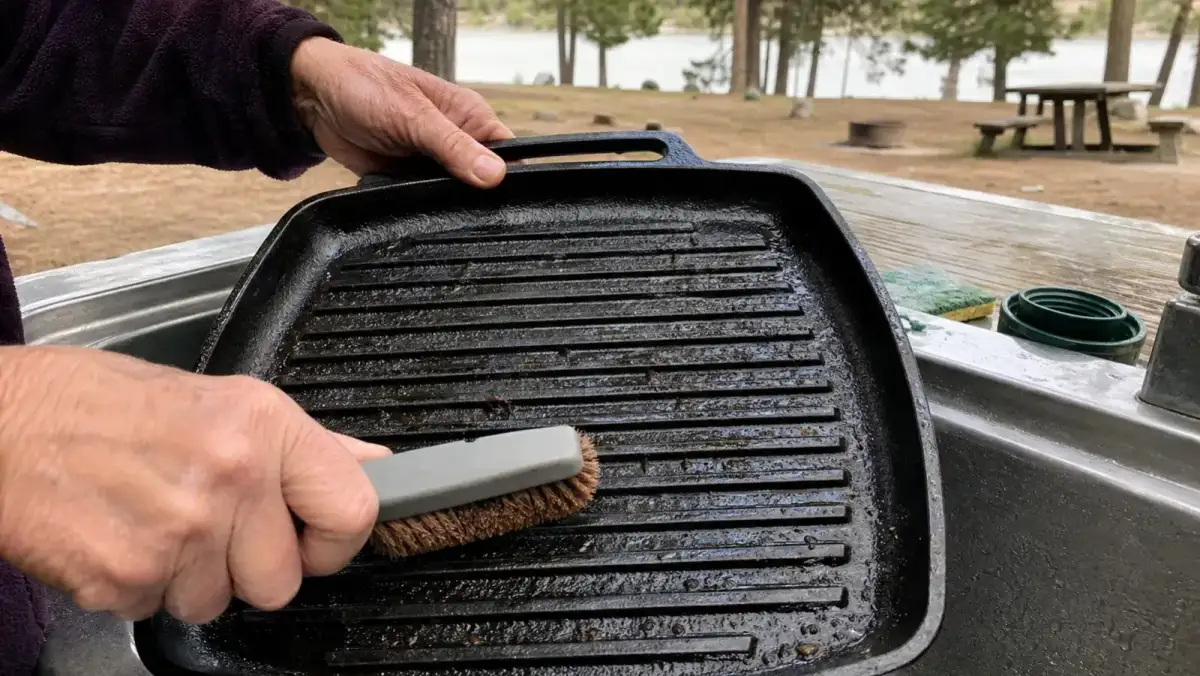
This is the biggest surprise nobody mentions, and it makes sense once you think about it, but I didn't think about it until I'd scorched a batch of pancakes finding out the hard way. This griddle is built to bridge two burners on a standard camp stove, and that sounds like a feature right up until you realize what it actually does to the heat. The middle of the pan, right where the two burner flames sit closest together, runs noticeably hotter than either end. Put four pancakes down in a neat row and the two in the center will be ready to flip while the two on the outside are still pale and loose.
I didn't understand this the first several times I used it. I'd assumed cast iron distributes heat evenly because that's the reputation cast iron has, and in a single skillet sitting over one burner, that reputation mostly holds up. Spread across two separate flames with a cooler gap of iron between them, though, it doesn't hold up nearly as well. What you end up managing is really two heat zones with a lukewarm valley between them, not one even cooking surface.
The fix, once I figured it out, is simple but takes some getting used to. I rotate what I'm cooking through the center zone in shifts rather than laying everything out at once and expecting it to finish together. Bacon goes toward the center where it actually renders, eggs go toward the ends where a gentler heat keeps them from turning rubbery. It works fine once you know to do it. But if you're buying this expecting one flat, evenly heated cooking surface the way a single burner and a single skillet gives you, that's not quite what you're getting, and none of the reviews I read before buying said a word about it.
What 'Pre-Seasoned' Actually Means
The listing calls this pan pre-seasoned, and technically that's true, but it's not what a lot of people picture when they read that word. If you've never owned cast iron before, pre-seasoned sounds like it means ready to cook, nonstick out of the box, done. That is not what the factory coating is for. It's a thin protective layer meant mostly to keep the pan from rusting on the shelf and in shipping. It is not the same thing as a properly built-up seasoning that actually releases food.
My first week with this pan, I stuck eggs to it three separate mornings in a row and genuinely wondered if I'd bought a defective one. I hadn't. What I'd bought was a pan with a starter coat, the same as any new cast iron, and I needed to treat the first couple weeks like a break-in period rather than expecting restaurant-grade nonstick performance on day one. A few deliberate rounds of cooking something greasy, bacon especially, and wiping it down with oil while it's still warm will get you there faster than just waiting around and hoping it improves on its own.
I'm not saying the word 'pre-seasoned' on the listing is dishonest exactly. It's just doing a lot of quiet work to imply something that isn't quite accurate, and if you go in expecting it, that first frustrating week will feel a lot less like a defect and a lot more like exactly what cast iron always requires.
Campgrounds Are Damp Places, and This Pan Doesn't Forgive That
Here's something that took me a while to appreciate about camp cast iron specifically, as opposed to cast iron sitting in a dry kitchen at home. A campsite is a damp environment almost no matter where you are. Morning dew settles on everything overnight, including whatever you left out on the picnic table. A trailer's outside kitchen cabinet holds humidity longer than a house does, especially near a lake or river, which is exactly where most of my favorite campgrounds happen to sit. None of the glowing reviews mention that this pan is living in a genuinely more hostile environment than the one it would sit in on somebody's stovetop at home.
It doesn't take a dramatic mistake to bring on surface rust. It doesn't require dunking the thing in a lake. A single evening of packing it away while the air itself is humid, even if the iron looks dry to the eye, can be enough to bring up a faint orange bloom by the next time you unwrap it. Cast iron reacts to ambient moisture, not just visible water, and a campground's air is rarely as dry as a kitchen's. I've had good luck avoiding it since I started treating that fact seriously, but it changed how casually I could store this pan compared to how I store my aluminum cookware, which honestly doesn't care what the air is doing.
The Ribbed Side Looks Great in Photos and Is a Genuine Pain to Clean
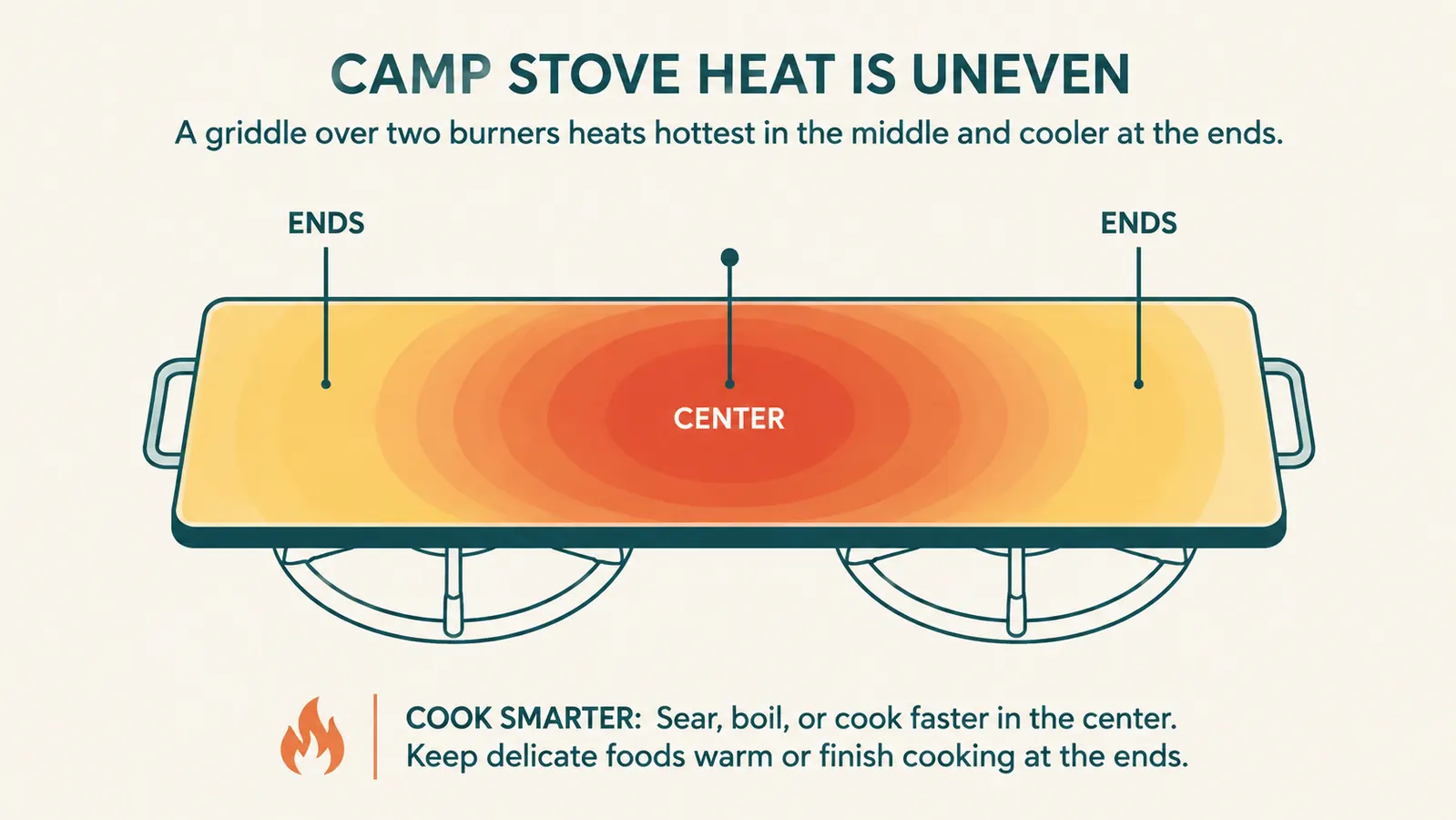
Everyone talks about the ribbed side like it's the highlight of the pan, and for cooking, it mostly is. But nobody talks about cleaning it, and cleaning it is where the ribbed side stops being a highlight. Grease and food residue don't just sit on top of those ridges the way they do on a flat surface. They settle down into the channels between the ribs, where a regular sponge or dish rag can't reach, and where they'll happily sit and go rancid if you let them.
I now keep a dedicated stiff-bristle brush just for this pan, because a soft sponge simply gives up on those grooves. Even with the brush, it takes real scrubbing time, longer than the flat side ever takes, and I've had to go back over it a second time more than once after thinking I'd gotten it clean. At an outdoor sink with lukewarm water and no dishwasher to fall back on, that's a genuinely bigger chore than the marketing photos of grill-marked burgers ever suggest. If you hate scrubbing dishes at camp, budget real extra time for this side specifically, because it does not clean up as fast as the flat side does.
The Grease Has to Go Somewhere, and the Lip Is Shallower Than It Looks
This one caught me off guard the first time I cooked a full pound of bacon on this griddle instead of just a few strips. The raised lip around the edge is real, but it's shallow, shallower than I expected from photos, and it's built more to catch a light amount of runoff than to hold back a genuine pool of rendered fat. Cook something greasy enough, especially angled slightly on an uneven picnic table or a stove that isn't perfectly level, and that grease will find the low point in the lip and start creeping toward the edge.
On a camp stove, that edge is right above the control knobs and the burner housing. I've caught runoff heading that direction more than once, close enough that I now keep a folded paper towel tucked at the front edge as an early warning and a bit of a dam whenever I'm cooking anything heavy in fat. It's a small habit, but it's one I had to develop myself, because nothing that came with the pan or in any review I read warned me the lip wouldn't hold back a real amount of grease on its own.
Tomatoes and Citrus Will Strip It Faster Than You'd Think
Cast iron and acid have never gotten along, and I knew that going in, at least in a general sense. What I didn't fully appreciate was how quickly a well-built seasoning layer can go dull after even one dish leaning heavily on tomatoes or citrus. I made the mistake of simmering a camp chili with a can of diced tomatoes right on this griddle's flat side one evening, thinking a griddle this size would work fine as a shallow pan for it. The next morning, eggs stuck in a way they hadn't in weeks, right in the patch where the chili had sat longest.
It wasn't permanent damage. A round of re-oiling brought it back within a few uses. But it was a real step backward in the seasoning I'd worked to build, and it taught me to keep this pan for what it does best, eggs, pancakes, bacon, burgers, and to reach for a stainless pot instead the moment tomatoes, salsa, or a squeeze of lemon over anything is involved. If you already know that about cast iron, this won't surprise you. If you're new to it, it's worth knowing before you find out with your own breakfast.
The Handles Get Blazing Hot, and They're Smaller Than You'd Expect
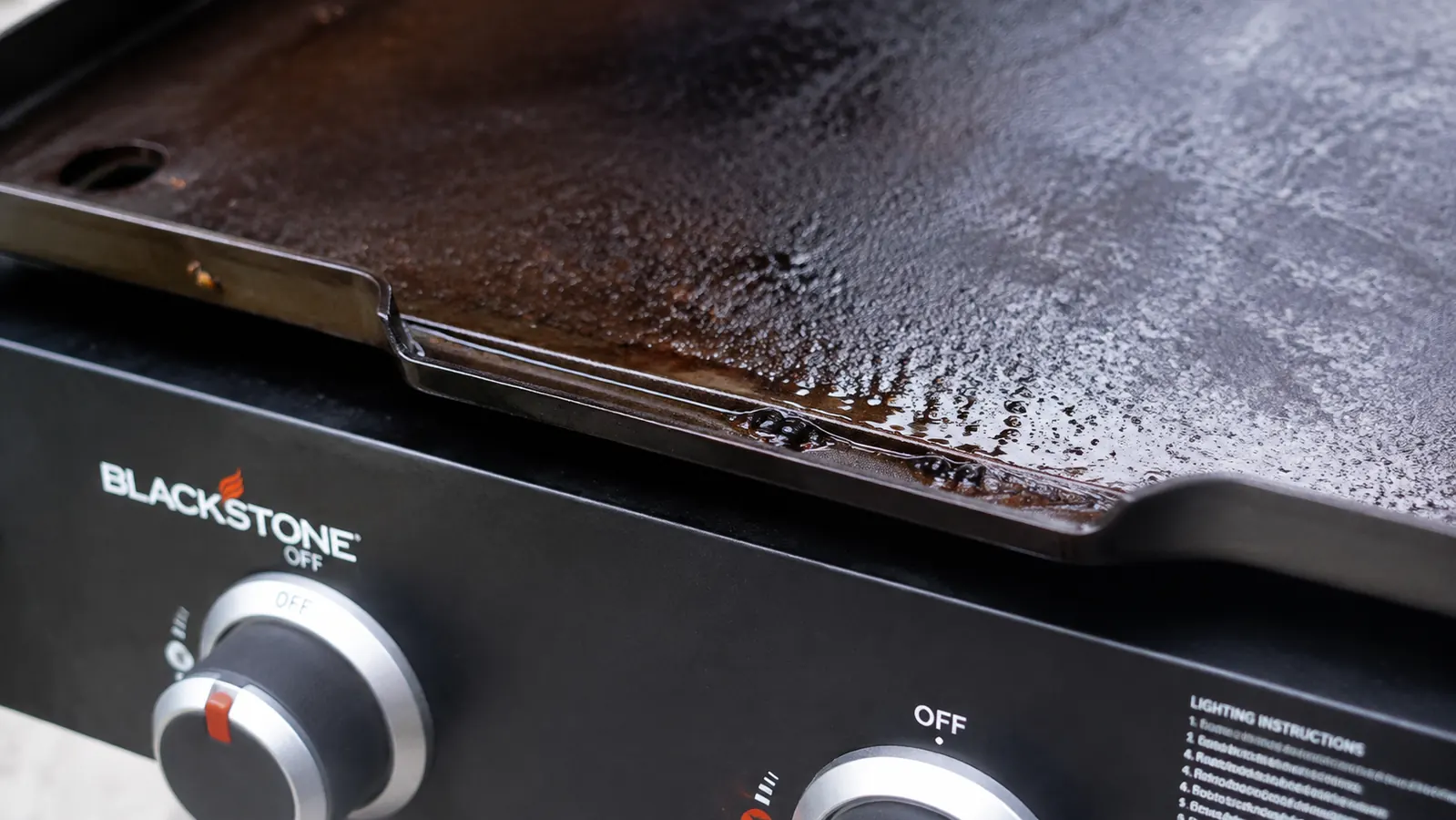
The handles on this pan are just short cast-iron nubs rather than anything with a separate grip or insulation, and they heat up right along with the rest of the pan, which means they get genuinely too hot to touch bare-handed within a few minutes of real cooking. That's true of most cast iron, so it isn't a defect, but the size of these particular handles surprised me. They're smaller and shorter than the handle on a typical cast iron skillet, which makes sense given the pan's overall shape, but it also means less surface area to grip with a hot pad and a little less leverage when you're lifting a pan this size, especially one hand at a time.
I keep a pair of silicone hot handle covers permanently in the same drawer as this pan now, because a folded dish towel slips more easily on these shorter handles than it does on a full-length skillet handle. It's a small adjustment, but it's one more thing the reviews don't mention, probably because most people photograph the pan cold and never talk about lifting it off a hot stove one-handed while balancing a plate in the other.
What I Liked
- Genuinely useful once you know its quirks, and bridges two burners so you're not juggling several pans
- The ribbed side does render bacon and burgers well, once you're prepared for the cleanup
- Rock solid over years of regular camp use, no cracking or structural issues at all
- PFAS-free cast iron with no coating to worry about wearing off
Where It Falls Short
- Uneven heat across the two burners it's meant to bridge, hot in the middle, cooler at the ends
- The ribbed side traps grease in the channels and takes real extra scrubbing time
- "Pre-seasoned" is not the same as actually seasoned, expect a rough first couple of weeks
- Rusts from ambient campground humidity, not just visible water, faster than I expected
- Shallow lip lets grease creep toward the stove's control knobs if you're cooking anything fatty
- Loses seasoning quickly around tomatoes, salsa, or citrus
- Short handles get seriously hot and offer less grip than a standard skillet handle
The five-star reviews aren't lying. They're just not telling you the whole thing, and the whole thing is what actually decides whether you'll be glad you bought it.
Who This Is For
This pan makes sense for someone who already understands cast iron's general rules, dry storage, no soap-heavy scrubbing, regular oiling, and just needs those rules adapted to a camp kitchen instead of a house kitchen. It's also a good fit if you're willing to learn its particular quirks, the hot center, the grease creep, the ribbed side cleanup, because once you know them, working around them stops being a chore and becomes second nature. If you cook real breakfasts and dinners at camp rather than heating something out of a bag, and you're patient enough to get through an imperfect first couple of weeks, this earns its space. I've written up how I built the seasoning on purpose over in my step-by-step seasoning guide, and the morning it truly won me over is its own story in the breakfast that changed my mind about it.
Who Should Skip It
If you want a pan that behaves the same no matter where you set it down, no hot spots, no acid restrictions, no drying ritual, this isn't it, and I don't think any cast iron would be a fair fit for you. If you cook a lot of tomato-based camp meals, chili, pasta sauce, anything with citrus marinades, you'll fight this pan more than you'll enjoy it, and a stainless or enameled pan will serve you better for that kind of cooking. And if you're not willing to towel it dry and oil it every single time, including the tired, rushed mornings when you'd rather just pack up and go, I'd genuinely think twice. This pan rewards the habits and punishes skipping them, and pretending otherwise wouldn't be honest of me.
Now you know what the five-star reviews left out. Decide with the full picture.
This is the exact Lodge reversible griddle I'm describing here, quirks and all. Knowing them in advance is what makes it worth owning.
Amazon Check Today's Price on Amazon →